 English
 中文简体
中文简体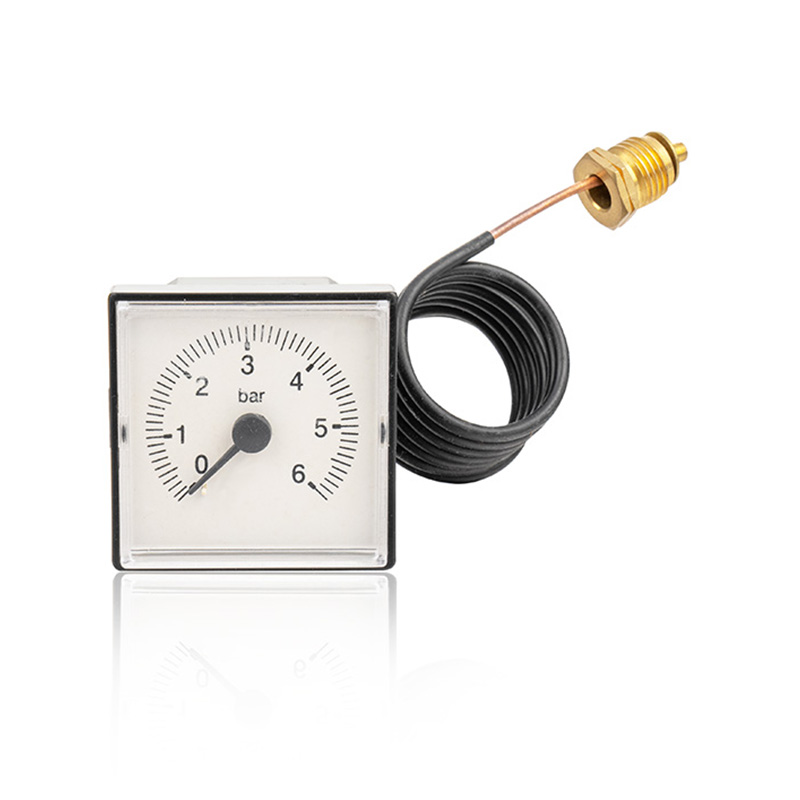


Call us
+86-15105800222
+86-15105800333


In HVAC temperature measurement, capillary thermometers remain a trusted instrument choice across a wide range of applications. Their mechanical simplicity, local display capability, and independence from external power sources make them a practical solution in environments where electronic sensors face limitations. Among the many parameters that define capillary thermometer performance, bore size and tube length are two of the most consequential — yet most frequently overlooked during the selection process. Both parameters directly govern dynamic response behavior and static measurement accuracy, with downstream effects on system control quality and energy efficiency.
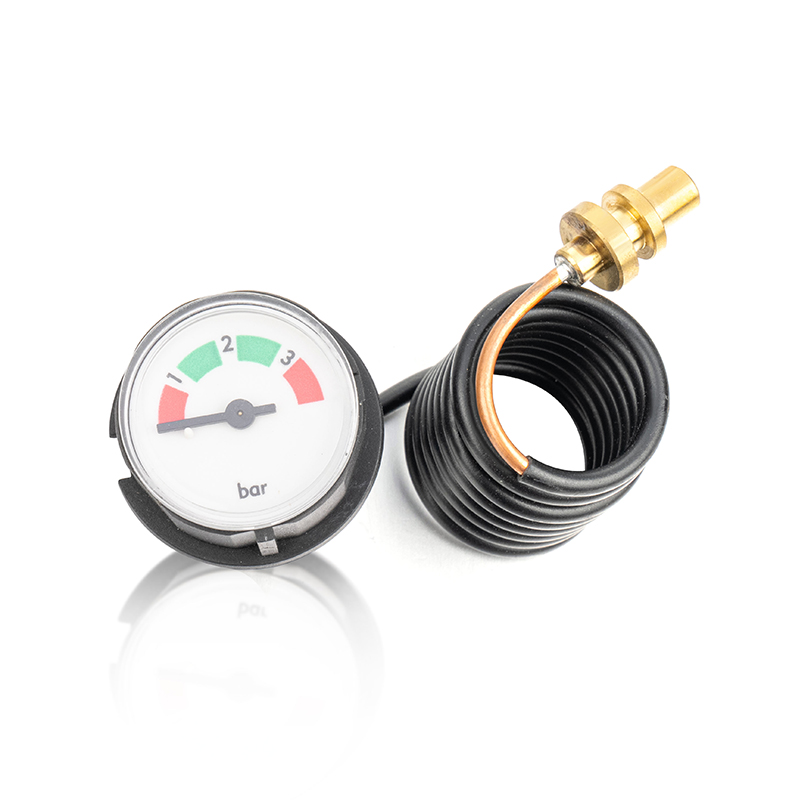
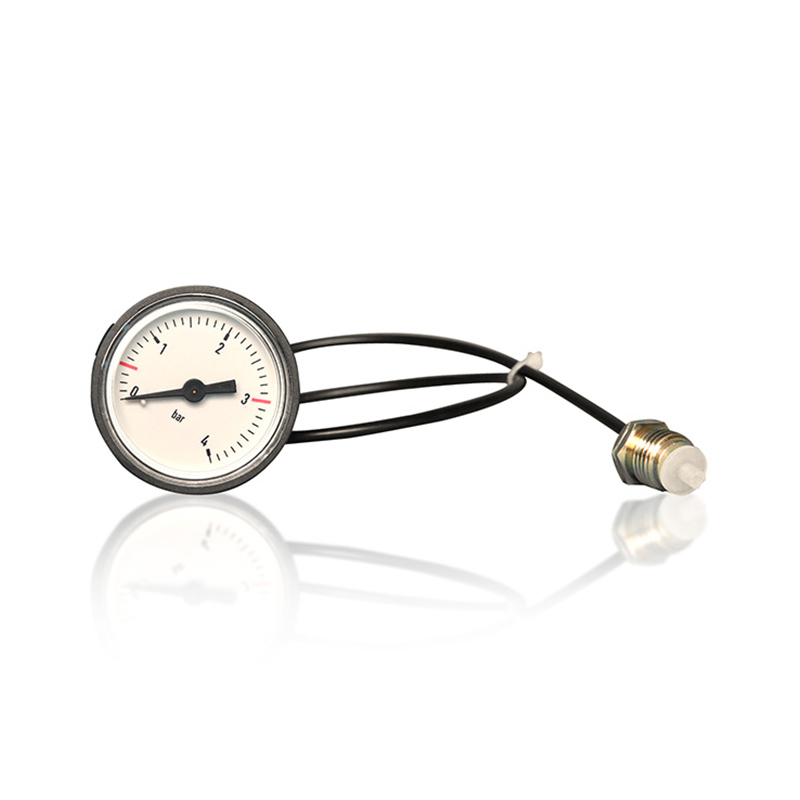
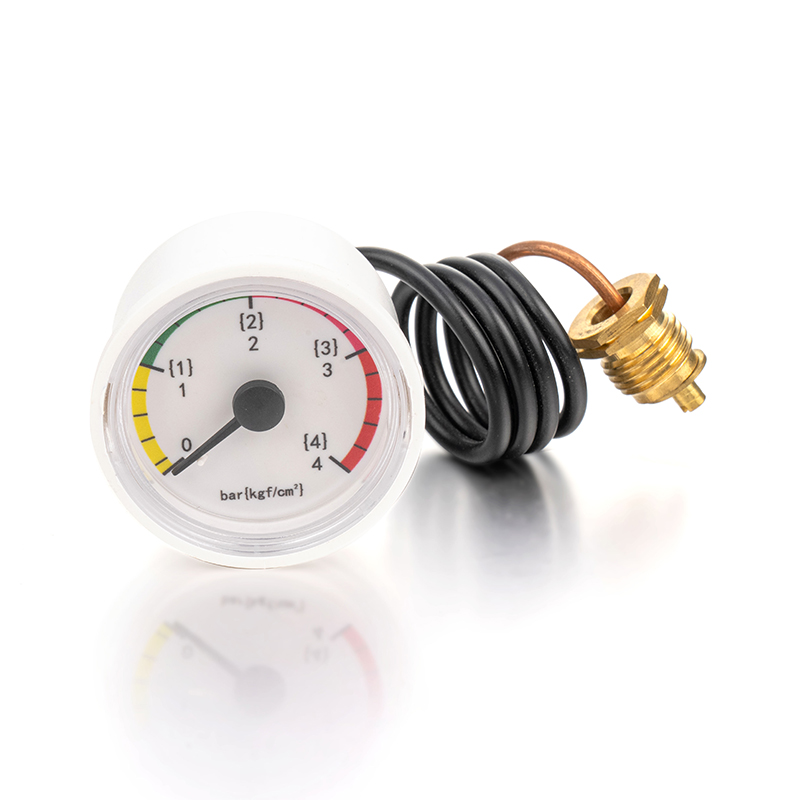
A capillary thermometer operates as a sealed, fluid-filled system comprising three elements: a sensing bulb, a capillary tube, and an elastic measuring element such as a Bourdon tube or diaphragm capsule. When the sensing bulb detects a change in the temperature of the measured medium, the fill fluid inside the closed system responds — either through volumetric expansion or pressure variation, depending on the fill type. This pressure signal travels through the capillary tube to the measuring element at the instrument head, where mechanical deflection drives pointer movement across the dial face.
The capillary tube is not merely a passive conduit. It governs the speed, fidelity, and environmental integrity of signal transmission between the bulb and the head. Any deviation in bore diameter or tube length from optimally matched values introduces measurable performance degradation at one or both ends of the accuracy-response tradeoff.
Capillary tube bore diameters in HVAC thermometers typically range from 0.3 mm to 1.5 mm. The relationship between bore size and instrument response time is governed by fluid dynamics within the sealed system.
A smaller bore produces a higher internal flow resistance. When the sensing bulb registers a temperature change, the resulting pressure variation must propagate through a narrower cross-section, slowing signal transmission to the measuring element. In applications requiring rapid temperature tracking — such as supply air temperature monitoring in variable air volume systems — an undersized bore introduces lag that can cause the control system to miss transient temperature peaks or respond to conditions that have already changed.
Increasing bore diameter reduces hydraulic resistance and accelerates signal propagation. However, a larger internal volume also increases the total quantity of fill fluid within the system. This dilutes the pressure increment generated per unit of temperature change at the sensing bulb, reducing the angular deflection of the measuring element per degree of temperature variation. The practical consequence is a loss of sensitivity and a coarser effective resolution at the dial face — a meaningful disadvantage in precision-critical applications such as chilled water return temperature monitoring in central plant systems.
Liquid-filled capillary thermometers are less sensitive to bore variation than gas-filled systems. The near-incompressibility of liquid fill media produces a stable, linear volume-to-temperature relationship, making transmission efficiency less dependent on bore geometry. Gas-filled systems, by contrast, exhibit greater compressibility and respond more acutely to bore-induced changes in flow resistance.
Capillary tube lengths in standard HVAC thermometer configurations range from 0.5 meters to 5 meters, with extended custom lengths available beyond 10 meters for specialized installations. Length influences accuracy through two distinct mechanisms: ambient temperature error accumulation and dynamic transmission delay.
The capillary tube runs through the installation environment between the sensing bulb and the instrument head, and the fill fluid within it is exposed to ambient thermal conditions along its entire length. The longer the tube, the greater the surface area available for heat exchange between the environment and the fill fluid. In installations where the capillary routing passes through high-temperature plant rooms, sun-exposed outdoor sections, or zones with significant thermal gradients, ambient heat absorbed by the tube body adds to the pressure signal reaching the measuring element, producing a positive offset in the displayed reading.
This effect is most pronounced in gas-filled capillary thermometers. The thermal expansion coefficient of gas fill media is substantially higher than that of liquids, making gas-filled systems disproportionately sensitive to ambient temperature variation along the tube length. Many manufacturers address this by incorporating bimetallic ambient compensation mechanisms within the instrument head. These mechanisms apply a corrective offset to counteract ambient-induced drift, but their effective compensation range is finite — typically covering environmental temperature differentials of ±10°C to ±20°C. Beyond these limits, residual ambient error becomes significant regardless of compensation design.
As tube length increases, the path over which pressure signals must travel from bulb to head becomes longer. Under conditions of rapid temperature change, this extended transmission path introduces dynamic measurement error. The instrument reading lags behind the actual process temperature by an amount that grows with tube length. Empirical data across common fill types and bore configurations indicates that increasing tube length from 1 meter to 5 meters extends the T90 response time — the time required to reach 90% of the final steady-state reading — by between 15% and 40%, depending on fill medium viscosity and the rate of temperature change in the process.
In HVAC applications with relatively stable process temperatures, this dynamic delay is rarely operationally significant. In systems where temperature swings are frequent or rapid, such as heat recovery units or direct expansion cooling coils, the combination of long tube length and slow response can result in persistent discrepancies between indicated and actual temperatures during transient operating periods.
Bore size and tube length are not independent variables. Their performance effects interact, and optimized selection requires treating them as a matched pair rather than separate specifications.
Longer tubes require larger bores to compensate for the increased hydraulic resistance of extended fill fluid columns. Without this bore increase, the combined effect of length-induced resistance and small cross-section produces disproportionate response lag. Conversely, shorter tubes can tolerate — and in some cases benefit from — reduced bore diameters, which increase sensitivity without introducing significant transmission delay.
For HVAC Square Capillary Thermometer selection, the following bore-to-length matching guidelines represent current engineering practice:
The physical properties of the fill medium establish the performance envelope within which bore and length parameters operate. Each fill type imposes different constraints on the optimal bore-length combination.
Liquid-filled systems using xylene, ethyl alcohol, or silicone oil exhibit higher viscosity than gas-filled systems. In longer tube configurations, viscous resistance to fluid movement becomes a meaningful factor, tightening the lower bound on acceptable bore diameter. These systems offer strong resistance to ambient temperature error along the tube, making them preferable for installations with variable environmental conditions along the capillary route.
Gas-filled systems, typically charged with nitrogen or an inert gas, have negligible viscosity and minimal bore-dependent flow resistance. Their primary challenge is ambient temperature sensitivity, which intensifies with tube length and requires careful management through routing, insulation, or compensation hardware.
Vapor-pressure systems introduce two-phase flow behavior within the capillary, with both liquid and vapor phases present depending on temperature conditions. Bore selection for vapor-pressure systems must ensure that both phases can move freely within the tube at all operating temperatures, adding design complexity not present in single-phase liquid or gas systems.
Correct bore and length selection during specification can be negated by poor installation practice in the field. Two failure modes are particularly common.
Excessive bending of the capillary tube during installation creates localized cross-section deformation at bend points. Even small reductions in bore diameter at a single location along the tube can dominate total hydraulic resistance, producing response times that substantially exceed the manufacturer's published specification. Minimum bend radii specified by the manufacturer — typically expressed as a multiple of the tube outer diameter — must be respected throughout the installation route.
Inadequate mechanical securing of the capillary tube allows vibration-induced fatigue over time. Micro-fractures developing in the tube wall permit slow fill fluid leakage, which progressively reduces the effective fill volume within the system. As fill quantity decreases, the pressure increment per degree of temperature change diminishes, causing indicated readings to fall below actual process temperatures. Linearity also deteriorates as the fill system departs from its designed operating parameters.
Where capillary routing cannot avoid proximity to high-temperature surfaces or electrical equipment, thermal insulation sleeves should be applied to the tube body to suppress ambient heat pickup and preserve the integrity of the bore-length performance relationship established during selection.

+86-15105800222
+86-15105800333


Shuangtang Industrial Zone,Liuheng Town , Putuo District, Zhoushan City,Zhejiang Province,China
We will reply to you within 12 hours after receiving the inquiry on working days. Or, give us a call.
The information provided on this website is intended for use only in countries and jurisdictions outside of the People's Republic of China.
Copyright © Zhoushan Jiaerling Meter Co., Ltd. All Rights Reserved.
 Wholesale Pressure Gauge Factory
