 English
 中文简体
中文简体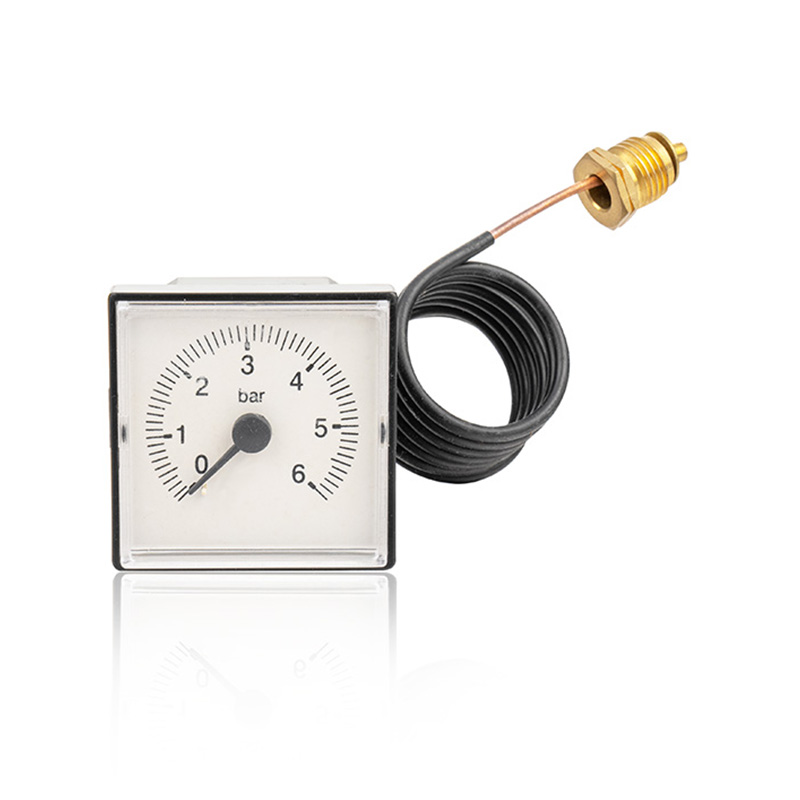
Call us
+86-15105800222
+86-15105800333


In the life-support systems of modern buildings, HVAC systems are responsible for regulating air temperature, humidity, and cleanliness. The HVAC Pressure Thermometer is the most intuitive and fundamental monitoring tool in these complex systems. It is more than just a measurement device; it serves as a vital health signal for system operation.
The HVAC Pressure Thermometer performs a dual monitoring task. For technicians, a temperature or pressure reading alone often fails to reflect the full status of a system. For instance, in a refrigeration cycle, the saturation temperature of a refrigerant at a given pressure is fixed. By observing both pressure and temperature through an HVAC Pressure Thermometer, one can quickly determine if the system is experiencing superheat or subcooling, thereby evaluating compressor efficiency.
Safety Assurance: In high-pressure boilers or large chillers, excessive pressure can lead to pipe bursts or equipment damage. The HVAC Pressure Thermometer provides a direct physical warning that does not rely on electrical power for sensors.
Energy Optimization: HVAC operating costs are significant. By precisely monitoring the temperature and pressure differentials across heat exchangers using an HVAC Pressure Thermometer, operators can ensure heat exchange efficiency remains in the optimal range, reducing energy waste.
Preventative Maintenance: Minor pressure fluctuations or temperature deviations are often early warnings of leaks, blockages, or declining pump performance.
Understanding the internal construction of an HVAC Pressure Thermometer helps in making informed decisions during installation and maintenance.
Most mechanical HVAC Pressure Thermometers use a Bourdon tube as the core element. This is a flattened metal tube shaped in a "C," spiral, or helix. When fluid pressure enters the tube, the flattened cross-section tends to become circular, causing the tube to straighten slightly. This displacement is amplified through a precision gear mechanism and converted into the rotational movement of the pointer on the dial.
Unlike standard mercury thermometers, industrial-grade HVAC Pressure Thermometers often utilize the vapor-tension principle. A bulb filled with a volatile liquid is placed in contact with the measured medium. As the liquid heats up and vaporizes, it creates pressure transmitted through a capillary tube to a Bourdon tube in the gauge head, reflecting the corresponding temperature on the scale. This design offers fast response times and supports remote reading.
When selecting an HVAC Pressure Thermometer, whether the case is filled with a damping fluid (typically glycerin or silicone oil) is a critical parameter.
| Parameter | Dry HVAC Pressure Thermometer | Liquid-Filled HVAC Pressure Thermometer |
| Vibration Resistance | Weak; pointer tends to flicker with system vibration | Extremely strong; fluid stabilizes the pointer |
| Internal Wear | Faster; gears wear out under high-frequency vibration | Extremely slow; fluid provides continuous lubrication |
| Readability | Difficult due to vibration interference | Steady pointer allows for precise reading |
| Moisture/Corrosion | Internal parts prone to moisture and corrosion | Well-sealed to prevent internal corrosion and fogging |
| Cost | Lower | Higher |
The wetted material (connectors and bulbs) of an HVAC Pressure Thermometer determines its application range.
| Material Property | Brass | 316 Stainless Steel |
| Corrosion Resistance | Suitable for water, air, non-corrosive gases | Suitable for chemicals, corrosive fluids, food-grade |
| Pressure Rating | Low to medium (usually below 6000 PSI) | High (can exceed 10000 PSI) |
| Max Temperature | Approx. 200°C | Approx. 400°C - 600°C |
| Common Applications | Residential heating and plumbing | Industrial cooling, petrochemical, pharmaceutical |
A common HVAC Pressure Thermometer used in boiler and pump rooms. It uses two metals with different expansion rates to drive the pointer. It is rugged and requires no power but has a slower response time.
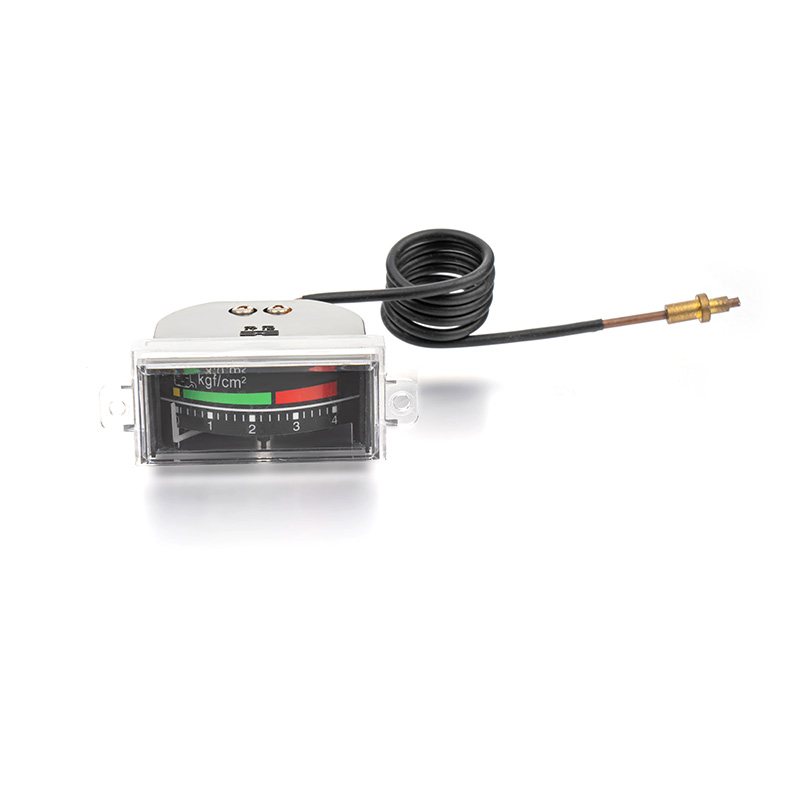
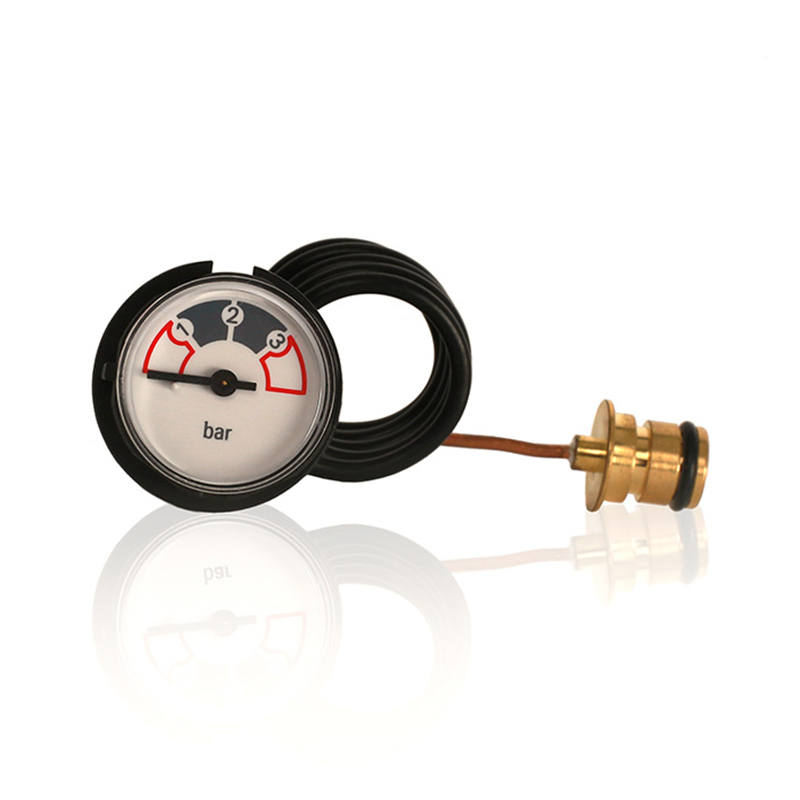
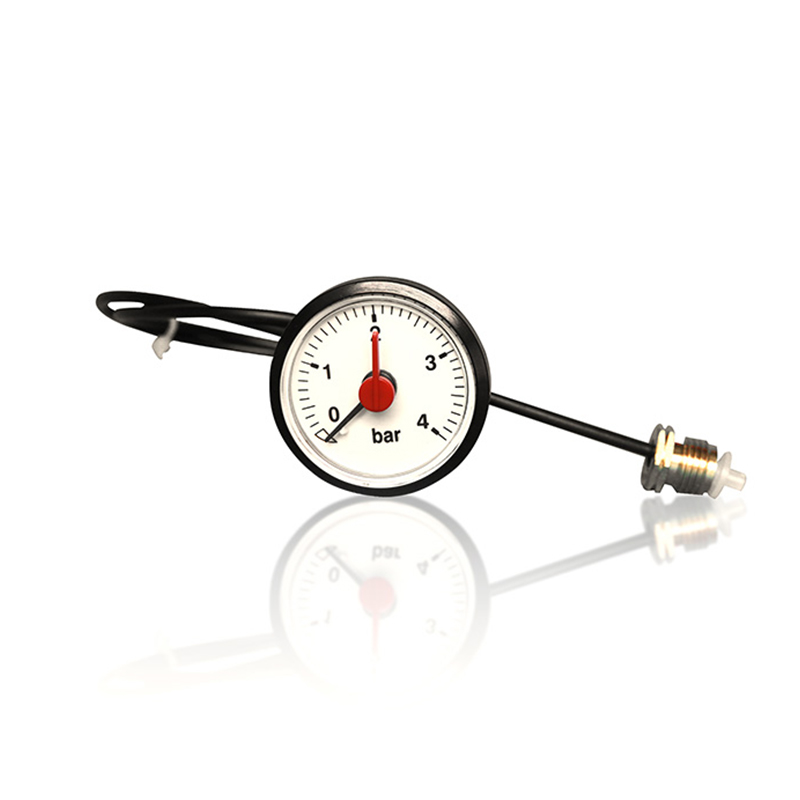
Used when the measurement point is in a hazardous or hard-to-reach area. It connects the sensor to the dial via a flexible capillary tube, typically 1.5 to 10 meters long.
Equipped with LCD screens and signal outputs (4-20mA), these are used for Building Automation Systems (BAS) for high precision and data logging.
| Feature | Center Back Mount | Bottom Mount | Every-Angle Mount |
| Connection | Rear center of the dial | Bottom of the dial | Adjustable/rotatable interface |
| Best Use | Panel mounting | Horizontal pipe tops | Complex piping intersections |
Installed at the inlet and outlet of evaporators and condensers. Technicians monitor the pressure differential to detect scaling or tube blockages.
Used as a mandatory safety accessory to prevent pipe fatigue from over-temperature and ensure the circulation pump provides enough pressure to reach top floors.
Differential HVAC Pressure Thermometers monitor air filter status. An increase in pressure drop indicates the need for a filter change.
Thread Sealing: Use Teflon tape on NPT threads. Always tighten using a wrench on the hexagonal socket, never by twisting the gauge case.
Insertion Depth: Ensure the bulb is positioned in the center of the flow for accurate temperature readings.
Siphons: In steam systems, use a "U" shaped siphon to create a water seal, protecting the HVAC Pressure Thermometer from high-temperature damage.
| Symptom | Possible Cause | Maintenance Suggestion |
| Pointer Vibration | Water hammer or cavitation | Install a dampener or use liquid-filled gauge |
| Sluggish Response | Scaling on bulb | Clean the sensing element |
| Not Returning to Zero | Overpressure damage | Replace the HVAC Pressure Thermometer |
For the best accuracy and longevity, the operating pressure should fall within the middle 1/3 to 2/3 of the HVAC Pressure Thermometer's full scale.
| Grade | Error Limit | Scenario |
| Class 1.0 | 1.0% | Laboratory or energy metering |
| Class 1.6 | 1.6% | Commercial chillers and boilers |
| Class 2.5 | 2.5% | General plumbing and residential |
Science: This is "thermal drift." High-quality HVAC Pressure Thermometers include internal compensation to counteract the physical expansion of components due to ambient temperature changes.
Science: Glycerin can oxidize over time when exposed to UV light or extreme heat. While it doesn't immediately stop the HVAC Pressure Thermometer from working, it suggests the gauge is near a high-heat source.
Science: Not necessarily. While they have better resolution, high-grade mechanical HVAC Pressure Thermometers are often more reliable in areas with heavy electromagnetic interference (EMI).

+86-15105800222
+86-15105800333


Shuangtang Industrial Zone,Liuheng Town , Putuo District, Zhoushan City,Zhejiang Province,China
We will reply to you within 12 hours after receiving the inquiry on working days. Or, give us a call.
The information provided on this website is intended for use only in countries and jurisdictions outside of the People's Republic of China.
Copyright © Zhoushan Jiaerling Meter Co., Ltd. All Rights Reserved.
 Wholesale Pressure Gauge Factory
