 English
 中文简体
中文简体


Call us
+86-15105800222
+86-15105800333


If you have ever watched a steam boiler operator tap a dial before opening a valve, or seen a technician check the refrigerant charge on an air conditioner, you already understand why pressure gauges matter. They turn an invisible force into a readable number. Without them, a pump could run dry, a compressor could overpressurize, or a medical oxygen line could deliver the wrong flow. A pressure gauge is a simple-looking instrument, but its internal design, materials, and calibration determine whether your system runs safely or fails quietly.
Here is the short answer: a pressure gauge is a device that measures the pressure of a gas or liquid inside a closed system. It converts that pressure into a mechanical pointer movement or a digital display. The most common industrial version uses a curved Bourdon tube that flexes as pressure rises, but diaphragm, capsule, bellows, and digital sensors are also widely used. The right choice depends on the medium, pressure range, temperature, vibration, and required accuracy.
This guide explains what a pressure gauge is, how it works, which types exist, how to specify one, and how to keep it accurate over years of service. It also covers installation mistakes, calibration intervals, and the industries that depend on reliable pressure measurement every day.
A pressure gauge is an instrument that measures the force a fluid or gas exerts on a unit area. In most industrial settings, the gauge displays gauge pressure, which is pressure relative to atmospheric pressure. Absolute pressure gauges measure pressure relative to a perfect vacuum, while differential pressure gauges measure the difference between two pressure ports. The vast majority of dial gauges you see on pumps, filters, and boilers are gauge pressure instruments.
The core principle is mechanical displacement. A sensing element, usually a Bourdon tube, diaphragm, capsule, or bellows, deforms when pressure changes. That deformation is amplified by a movement mechanism, which rotates a pointer across a calibrated dial. The dial scale is printed in units such as psi, bar, kPa, MPa, or kg/cm². The pointer position tells you the current pressure, and the scale markings let you judge whether the system is operating normally.
Digital pressure gauges replace the mechanical movement with a pressure sensor and an electronic display. They offer higher resolution, data logging, and easier integration with control systems. However, mechanical gauges remain popular because they need no power, tolerate harsh environments, and provide an immediate visual reading without menus or batteries.
Understanding the pressure reference is critical. A tire pressure gauge reads gauge pressure: 32 psi means 32 psi above atmospheric pressure. A vacuum gauge reads negative gauge pressure, often called vacuum. An absolute pressure gauge reads from zero absolute, so at sea level it shows about 14.7 psi when open to atmosphere. Differential pressure gauges measure the drop across a filter, valve, or orifice. Choosing the wrong reference type can lead to serious errors in process control.
| Type | Reference Point | Typical Units | Common Applications |
|---|---|---|---|
| Gauge pressure | Local atmospheric pressure | psi, bar, kPa | Pumps, boilers, compressed air, hydraulic systems |
| Absolute pressure | Perfect vacuum | psia, bara, kPa abs | Vacuum processes, refrigeration, altitude testing |
| Differential pressure | Difference between two ports | psi, inH₂O, Pa | Filter monitoring, flow measurement, cleanrooms |
| Vacuum pressure | Below atmospheric | inHg, mbar, Torr | Medical suction, vacuum packaging, distillation |
The Bourdon tube is the most recognizable pressure sensing element. It is a curved metal tube with an oval cross-section. One end is fixed to the pressure connection, and the other end is sealed and free to move. When pressure enters the tube, the oval cross-section tries to become circular, causing the curved tube to straighten. The free end moves a few millimeters, and a linkage and gear mechanism amplify that motion to rotate the pointer. Bourdon tubes handle pressures from about 0.6 bar up to 1,600 bar and beyond, making them the workhorse for general industrial pressure measurement.
Diaphragm pressure gauges use a flexible circular membrane instead of a tube. Pressure pushes the diaphragm against a spring, and the deflection drives the pointer. Diaphragms are ideal for low pressures, viscous media, slurries, and corrosive fluids because the sensing element can be isolated from the process by a fluid fill or a chemical-resistant coating. Capsule gauges use two corrugated diaphragms welded together to form a capsule. They are extremely sensitive and measure very low pressures, often in the range of a few millibars to a few bar. Bellows gauges use a convoluted metal bellows that expands and contracts linearly with pressure. They are common in low-pressure applications where a linear output is helpful.
Each sensing element has a different pressure range, accuracy, and cost profile. The table below compares them side by side.
| Sensing Element | Typical Pressure Range | Accuracy | Best For |
|---|---|---|---|
| Bourdon tube | 0.6 to 1,600 bar | ±0.5% to ±2.5% FS | General industrial, steam, water, oil, gas |
| Diaphragm | 0 to 25 bar | ±1% to ±2.5% FS | Corrosive, viscous, or sanitary media |
| Capsule | 0 to 2.5 bar | ±0.5% to ±2.5% FS | Low-pressure air, gas, draft measurement |
| Bellows | 0 to 1 bar | ±1% to ±2.5% FS | Low-pressure indication, HVAC, clean rooms |
| Digital / electronic | Any range | ±0.1% to ±1% FS | Precision monitoring, data logging, control loops |
Beyond the sensing element, every mechanical gauge has a movement that converts small displacement into pointer rotation. The movement includes linkages, pivots, and gears. A hairspring keeps the gears engaged and removes backlash. The pointer is usually lightweight aluminum or plastic, balanced to resist vibration. The dial is printed with a scale, unit labels, and sometimes color zones for safe, warning, and danger ranges. A clear window, made of glass or polycarbonate, protects the dial from dust and moisture. The case material, often steel, stainless steel, brass, or plastic, determines the gauge’s resistance to corrosion and impact.
Pressure gauges come in many forms, and each type solves a specific problem. The list below covers the most common industrial options and explains where each one shines.
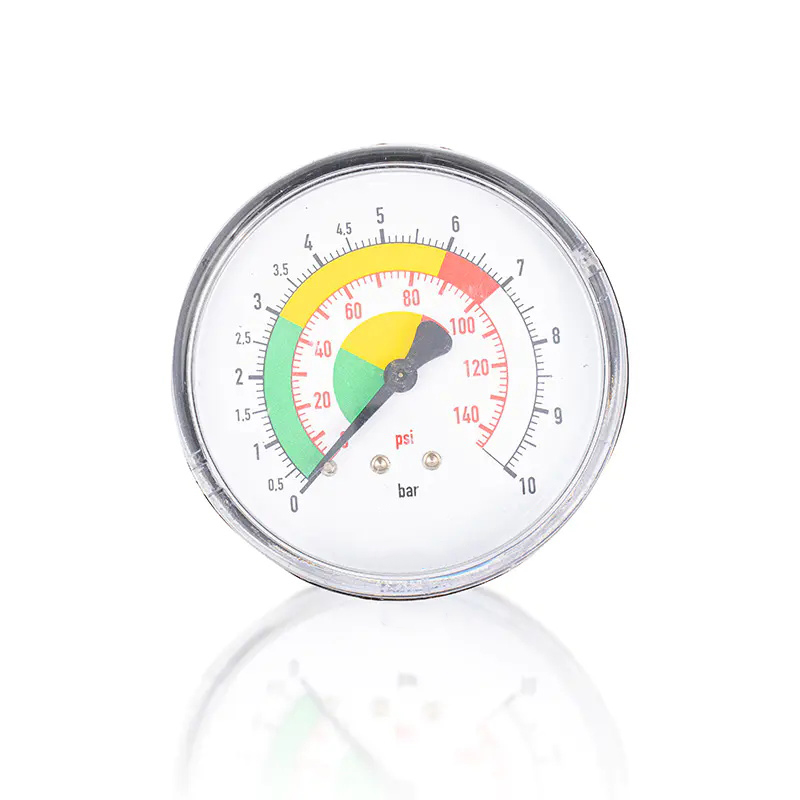 Y60 Pressure Gauge ManufacturersThe Y60 series pressure gauge uses advanced sensing technology and high-precision manufacturing processes to provide accurate pressure measurement data. High-precision...View Product →
The Bourdon tube gauge is the default choice for general industrial pressure measurement. It is available in dry or liquid-filled versions. Liquid filling, usually glycerin or silicone oil, dampens vibration and pulsation, protecting the movement and making the pointer easier to read. Common case sizes are 40 mm, 50 mm, 63 mm, 100 mm, and 150 mm. Connection types include radial (bottom) and axial (back) mounts. A 63 mm stainless steel gauge with a 1/4" NPT connection is a typical selection for a water pump or air receiver.
Diaphragm gauges are chosen when the process fluid would clog or corrode a Bourdon tube. The diaphragm separates the process from the movement, and the space above the diaphragm can be filled with a non-toxic fluid. This design is common in chemical plants, food processing, and water treatment. A diaphragm seal can be added to further isolate the gauge from aggressive media. Materials include PTFE, PP, and stainless steel, depending on chemical compatibility.
Capsule gauges measure very low pressures, such as draft in a furnace or static pressure in an air duct. Bellows gauges are similar but use a stacked bellows for a more linear response. Both are common in HVAC, cleanroom, and laboratory environments. They are not suitable for high pressures or rapid pressure spikes.
Digital pressure gauges use a strain-gauge or piezo-resistive sensor and provide a numeric readout. They can measure gauge, absolute, or differential pressure and often include features like min/max recording, data hold, and analog output. Differential pressure gauges are essential for monitoring filter loading, pump efficiency, and flow across an orifice. They are widely used in water treatment, pharmaceutical, and semiconductor facilities.
Specialty gauges include refrigerant gauges for HVAC service, medical gauges for oxygen and vacuum, tire pressure gauges, oil pressure gauges for engines, and submersible gauges for diving equipment. These instruments are built to specific standards and often use unique connections, scales, or materials.
Every pressure gauge, no matter the type, shares a common set of components. Understanding each part helps you specify the right gauge and troubleshoot problems later.
The Bourdon tube, diaphragm, capsule, or bellows that moves in response to pressure. Material selection here determines chemical compatibility and pressure range.
The gear and linkage mechanism that amplifies the sensing element’s motion and drives the pointer. A quality movement resists wear and vibration.
The printed scale and the needle that indicate pressure. Dial size affects readability from a distance. Color zones help operators spot unsafe conditions quickly.
The housing protects internal parts. Stainless steel cases resist corrosion; brass and plastic are used in less demanding environments. The window may be glass, acrylic, or polycarbonate.
The threaded fitting that connects the gauge to the process. Common threads include NPT, BSP, and metric. Connection location can be radial, axial, or panel mount.
Some gauges include a restrictor screw, a blow-out plug, or a solid front case to protect the operator if the sensing element fails. These features are important for high-pressure or hazardous service.
Selecting a pressure gauge is not simply about picking a dial size. The wrong range or accuracy class can lead to poor resolution, premature failure, or unsafe operation. Use the following criteria to narrow your options.
Choose a range where normal operating pressure falls between 25% and 75% of the full scale. This keeps the pointer in the most accurate part of the dial and leaves room for pressure spikes. For example, if a system runs at 8 bar, a 0–16 bar gauge is a better choice than a 0–10 bar gauge. A gauge that constantly reads near full scale will fatigue quickly and may fail early.
Accuracy is expressed as a percentage of full scale (FS). A ±1.6% FS gauge on a 0–10 bar range can be off by ±0.16 bar. For critical processes, choose ±1.0% or ±0.5% FS. Laboratory and test gauges can reach ±0.1% FS. Remember that accuracy is only valid at room temperature and with proper installation.
Dial size affects readability. A 40 mm gauge is fine for a small compressor, but a 100 mm or 150 mm dial is better for a control panel viewed from a distance. Mounting options include bottom connection (radial), back connection (axial), panel mount with a U-clamp, and surface mount. Choose based on how the gauge will be installed and whether the operator needs to read it from the front or side.
The wetted parts, including the socket, Bourdon tube, and diaphragm, must be compatible with the process medium. Stainless steel 304 or 316 is common for water, air, and mild chemicals. Brass is used for non-corrosive gases and water. For aggressive chemicals, choose PTFE, PP, or Monel. Always check a chemical compatibility chart before ordering.
High temperatures can change the elasticity of the sensing element and cause reading errors. Use a siphon tube or capillary to isolate the gauge from steam. Vibration and pulsation are best handled with a liquid-filled gauge. Glycerin filling is standard; silicone filling is used for higher temperatures or where glycerin may not be compatible.
Common connection sizes are 1/8", 1/4", and 1/2" NPT or BSP. The connection must match the mating fitting. For panel mounting, a back connection with a clamp is often preferred. For direct mounting on a pipeline, a bottom connection with a wrench flat is easier to tighten.
Pressure gauges appear in almost every industry that moves fluids or gases. The following sectors have specific requirements that influence gauge selection.
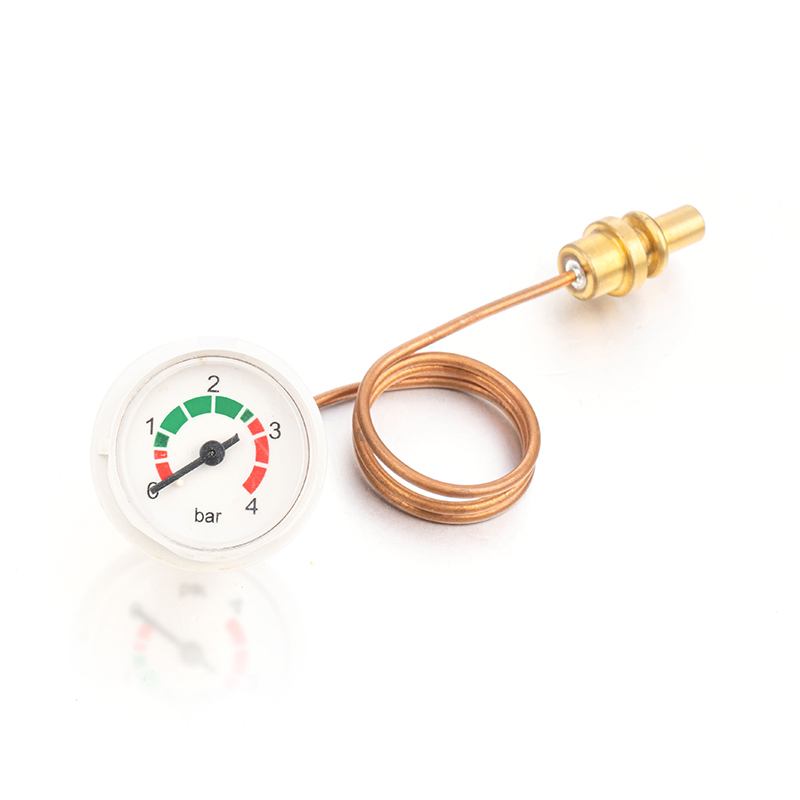
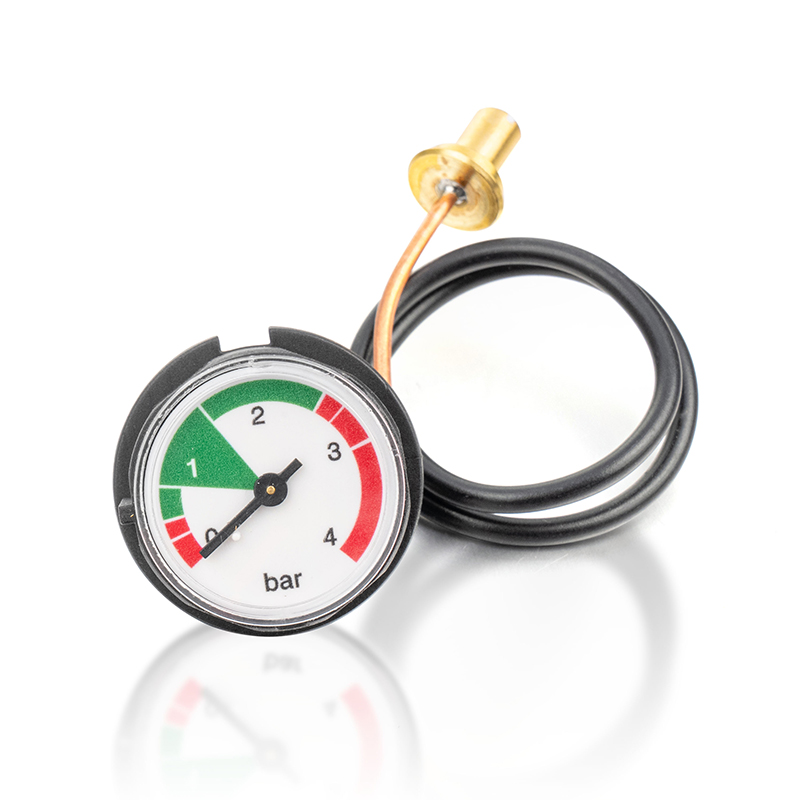
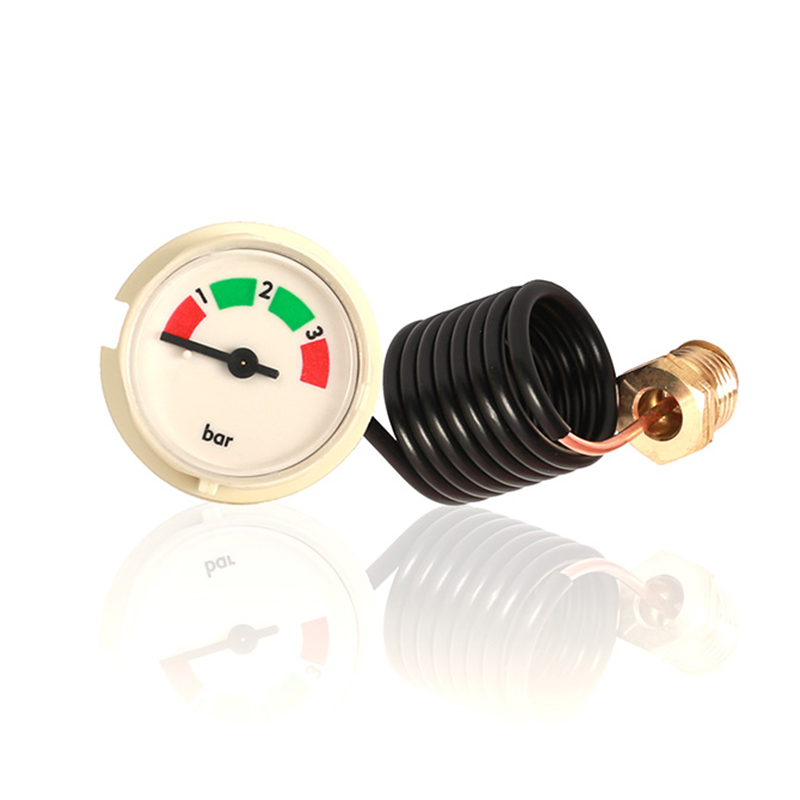
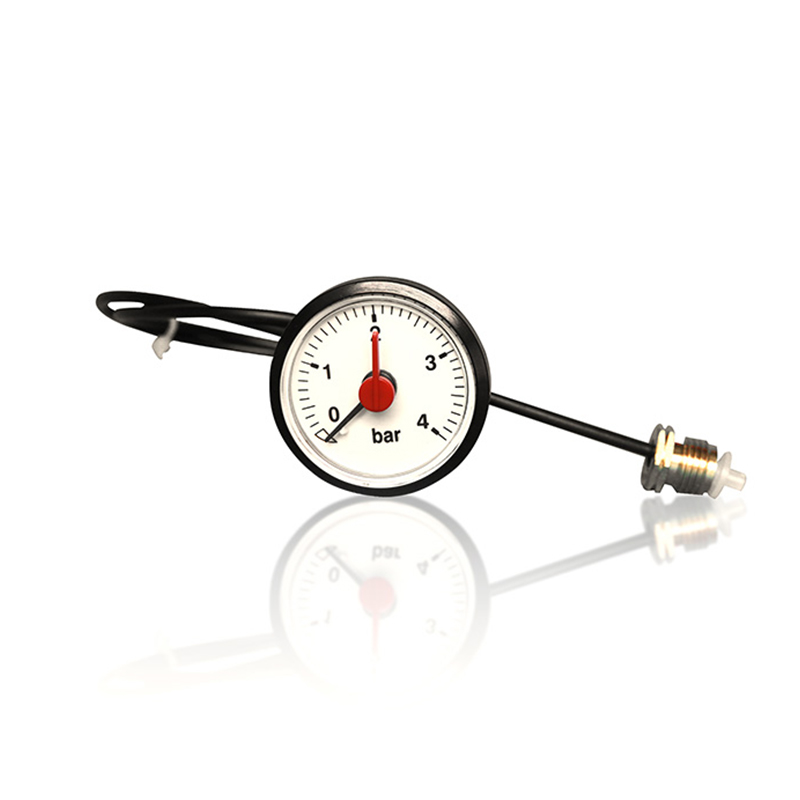
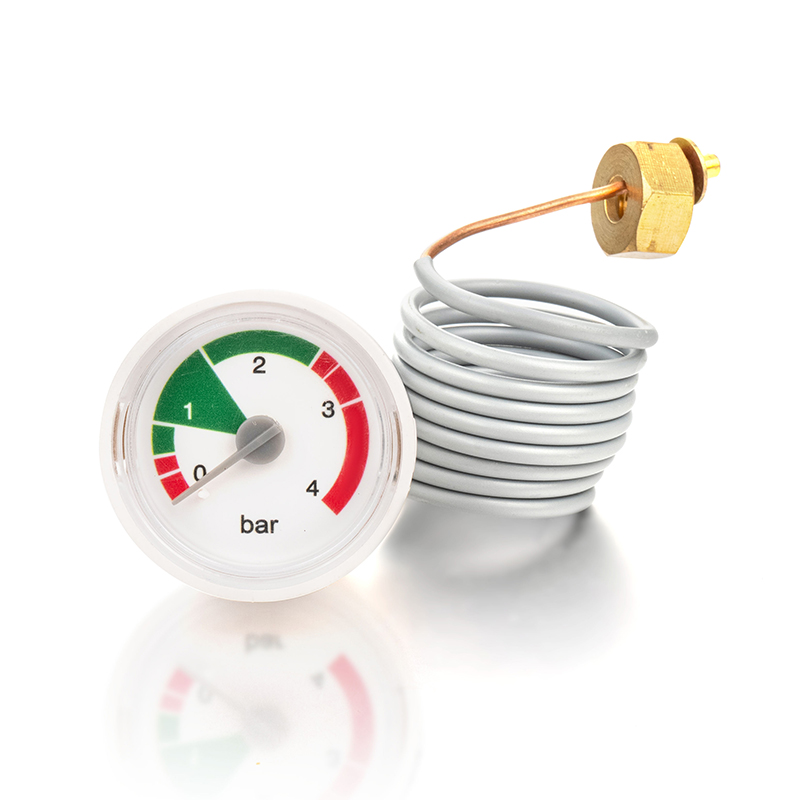
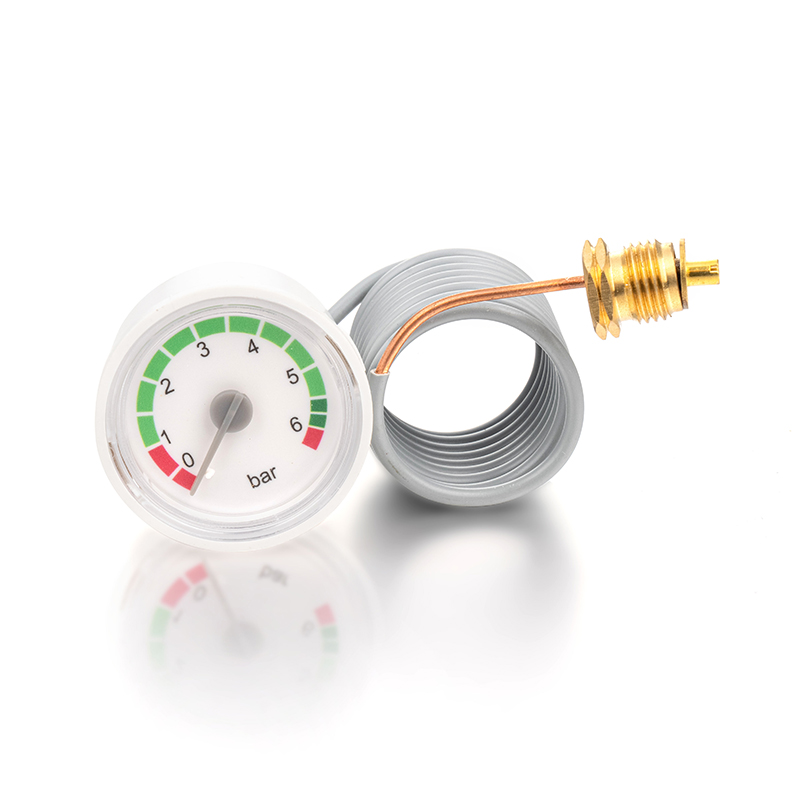
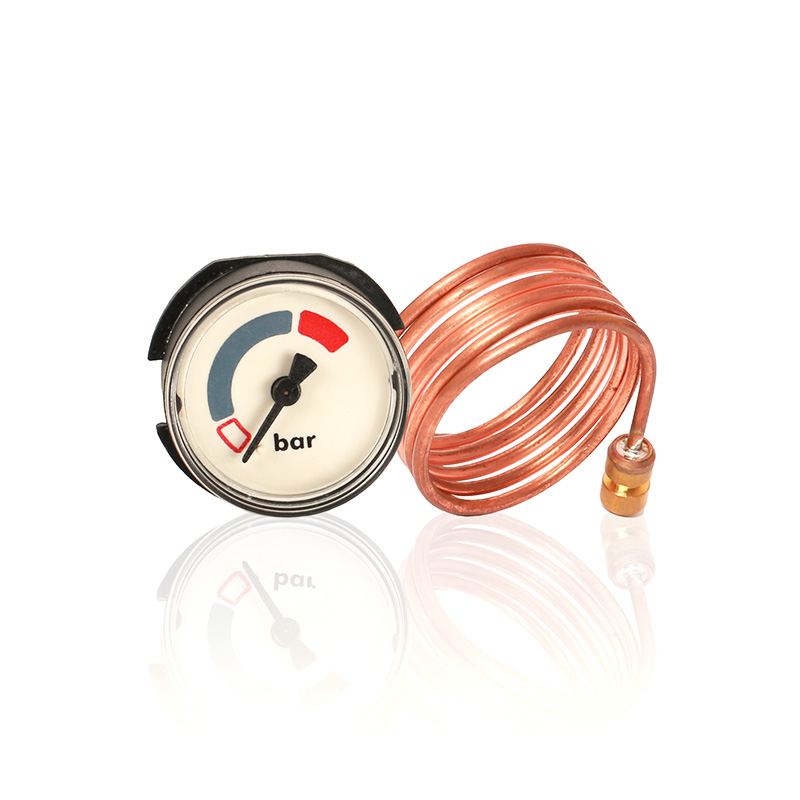 HVAC Capillary Pressure Gauge ManufacturersHVAC capillary pressure gauges transmit pressure signals to remote locations through a thin capillary tube, which can be used in scenarios where installation space is ...View Product →
HVAC systems use pressure gauges to monitor refrigerant charge, compressor suction and discharge, and chilled water loops. A refrigerant pressure gauge often combines pressure and temperature scales for quick superheat and subcooling checks. Capillary-tube gauges allow the dial to be mounted remotely from the pressure port, which is useful in tight equipment rooms. A quality refrigerant pressure gauge must tolerate vibration, temperature swings, and oil contamination.
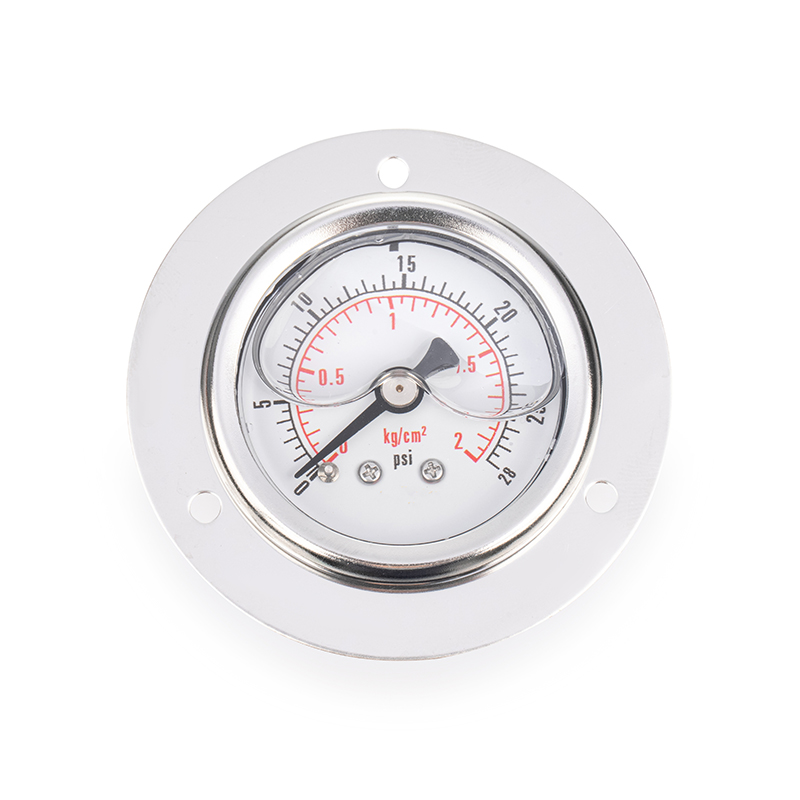 All Stainless Steel Petrochemical Oil-Filled Seismic Pressure Gauge ManufacturersThere are a lot of corrosive media in the petrochemical industry, such as acids, alkalis, and other chemicals. The all-stainless steel oil-filled anti-seismic pressure...View Product →
Petrochemical plants handle corrosive, toxic, and flammable media. Gauges here are often all-stainless-steel, liquid-filled, and equipped with diaphragm seals. A seismic or oil-filled gauge resists pump pulsation and vibration. Material selection is critical: 316 stainless steel for many acids, PTFE diaphragms for aggressive chemicals, and Monel for hydrofluoric acid service. Safety features like solid front cases and blow-out backs are common.
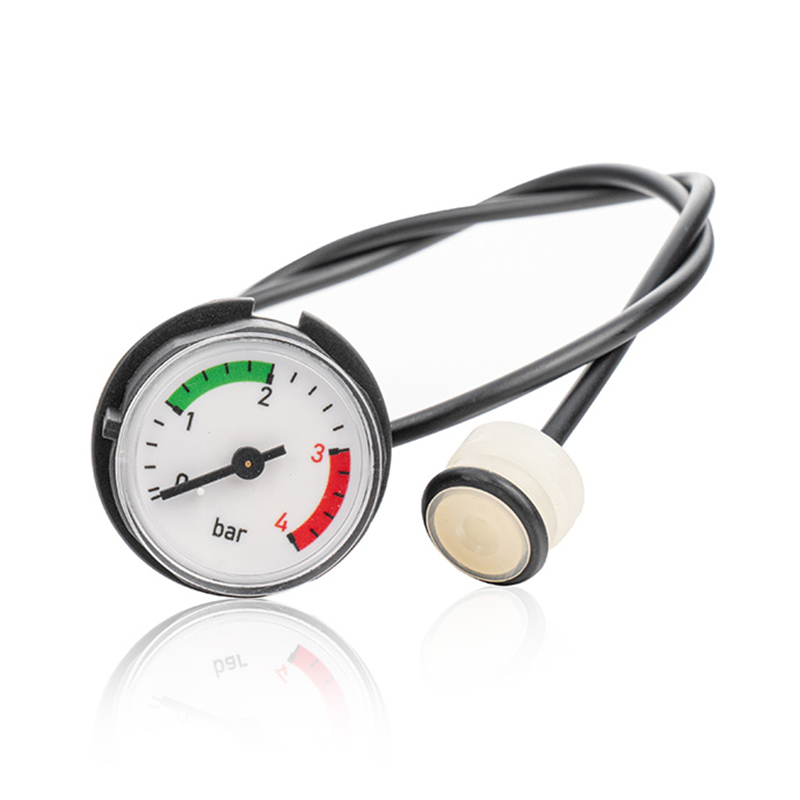
Water treatment plants use pressure gauges to monitor pump discharge, filter differential, and membrane pressure. A gauge with a diaphragm seal prevents clogging from suspended solids. For residential and commercial water purifiers, a small pressure gauge helps homeowners and technicians verify inlet pressure and detect filter blockages. Shockproof and oil-filled gauges are preferred for pump systems that cycle frequently.
Medical pressure gauges measure oxygen, vacuum, and blood pressure. They must be accurate, cleanable, and often color-coded for safety. A sphygmomanometer gauge is a familiar example. Medical vacuum gauges monitor suction systems in operating rooms and dental clinics. Calibration and maintenance schedules are stricter in healthcare than in general industry.
Boats and vehicles use pressure gauges for oil pressure, fuel pressure, tire pressure, and hydraulic systems. Marine gauges must resist saltwater corrosion, while automotive gauges must tolerate vibration and temperature extremes. A tire pressure gauge is a simple but critical tool for safety and fuel efficiency.
Food processing requires sanitary pressure gauges that can be cleaned in place. Diaphragm seals with Tri-Clamp fittings are common. The gauge must not harbor bacteria, so smooth surfaces and FDA-compliant materials are essential.
Power plants, biogas systems, and emission control equipment use pressure gauges to monitor combustion, filtration, and gas compression. Explosion-proof gauges are required in hazardous areas. Corrosion-resistant gauges handle flue gas and chemical scrubbers.
A pressure gauge is only as good as its installation and upkeep. Many accuracy complaints trace back to improper mounting, missing accessories, or overdue calibration.
Mechanical pressure gauges drift over time due to wear, vibration, and temperature cycling. A typical industrial gauge should be calibrated every 6 to 12 months, depending on criticality. Calibration involves comparing the gauge reading against a known reference, such as a deadweight tester or a digital pressure calibrator. Adjustments are made by turning the pointer or adjusting the movement linkage. If a gauge cannot be adjusted to within its accuracy class, replace it. Digital gauges may have a calibration function or require a software tool.
Regular maintenance extends gauge life. Check for leaks at the connection, cracks in the window, and corrosion on the case. Clean the window with a soft cloth and mild soap. Do not use solvents that may damage plastic. For liquid-filled gauges, check for discoloration or loss of fill fluid. Replace the gauge if the pointer sticks, the glass fogs permanently, or the reading jumps erratically. A simple guide to pressure gauge selection can help you decide whether to repair or replace.
Even a well-made gauge can fail if it is misapplied. Here are the most common issues and their solutions.
| Problem | Likely Cause | Solution |
|---|---|---|
| Pointer does not return to zero | Bent pointer, damaged movement, or overpressure | Replace gauge; install overpressure protection |
| Reading drifts or is inaccurate | Fatigue of sensing element, temperature effect, or wear | Recalibrate or replace; use temperature compensation |
| Pointer vibrates excessively | Pump pulsation or machine vibration | Use liquid-filled gauge or install a snubber |
| Leak at connection | Improper tightening, damaged threads, or missing sealant | Re-tighten with appropriate thread sealant; replace fitting |
| Window fogs or fills with liquid | Case seal failure or condensation | Replace gauge; consider a sealed or filled case |
| Gauge reads high or low consistently | Wrong pressure reference or calibration error | Verify gauge type; recalibrate against master |
Use this step-by-step approach to narrow down the thousands of possible gauge configurations.
If you are unsure, start with a 63 mm stainless steel liquid-filled gauge with a 0–16 bar range and a 1/4" NPT bottom connection. It covers a wide range of industrial applications and is easy to source. For specialized needs, consult a supplier who understands your industry’s standards.
A pressure gauge displays the current pressure. A pressure switch opens or closes an electrical contact when pressure reaches a set point. They are often used together: the gauge shows the pressure, and the switch controls the pump or alarm.
Yes, a vacuum gauge or a compound gauge can measure pressure below atmospheric. Compound gauges read both positive pressure and vacuum on the same dial. They are common in refrigeration and medical suction systems.
Most industrial gauges should be calibrated every 6 to 12 months. Critical applications may require quarterly calibration. Gauges in clean, low-vibration environments can go longer, but always follow your quality system’s requirements.
Liquid filling, usually glycerin or silicone oil, dampens vibration and pulsation. It protects the movement from wear and makes the pointer easier to read in dynamic systems such as pumps, compressors, and hydraulic power units.
A siphon creates a water seal that isolates the gauge from hot steam. It also adds a small pressure drop, but the main effect is temperature reduction. If the reading changes significantly, check for a clogged siphon or trapped air.
FS stands for full scale. On a 0–10 bar gauge, ±1.6% FS means the reading can be off by up to 0.16 bar anywhere on the dial. The error is a percentage of the maximum range, not the current reading.
It depends on the wetted materials. A gauge with a brass or stainless steel Bourdon tube may work for oil, but the seal material must be compatible. Always check the manufacturer’s compatibility chart. Using the wrong gauge can lead to leaks or inaccurate readings.
Differential pressure gauges measure the pressure difference between two points. They are used to monitor filter clogging, flow rates, and cleanroom pressure. A common example is the gauge on a swimming pool filter that shows when the filter needs cleaning.
A pressure gauge is a small but essential window into your system’s health. Whether you are maintaining a boiler, charging an air conditioner, or monitoring a chemical reactor, the right gauge gives you the information you need to act safely and efficiently. Focus on the basics: correct pressure range, compatible materials, appropriate accuracy, and proper installation. Then keep the gauge calibrated and maintained. That approach will prevent most failures and keep your processes running smoothly for years.
If you are sourcing pressure gauges for a specific industry, look for a manufacturer who offers a range of sensing technologies, materials, and connections. A supplier who understands your application can help you avoid costly mistakes and ensure the instrument performs as expected. From general-purpose Bourdon tube gauges to specialized medical and petrochemical instruments, the right pressure gauge is out there. The key is matching the instrument to the job.

+86-15105800222
+86-15105800333


Shuangtang Industrial Zone,Liuheng Town , Putuo District, Zhoushan City,Zhejiang Province,China
We will reply to you within 12 hours after receiving the inquiry on working days. Or, give us a call.
The information provided on this website is intended for use only in countries and jurisdictions outside of the People's Republic of China.
Copyright © Zhoushan Jiaerling Meter Co., Ltd. All Rights Reserved.
 Wholesale Pressure Gauge Factory
