 English
 中文简体
中文简体



Call us
+86-15105800222
+86-15105800333


Ask whether 80 PSI is normal and the answer depends entirely on what you are measuring. For a residential water supply, 80 PSI sits at the upper edge of acceptable. For a passenger car tire, 80 PSI is roughly double what it should be. That gap is why "normal PSI range" never has a single universal answer. This guide maps the typical PSI ranges for five common systems — home water lines, vehicle tires, well pumps, pool filters, and industrial pneumatic equipment — and shows you how to measure pressure correctly, spot problems early, and decide when a reading needs action.
The abbreviation PSI stands for pound-force per square inch. It describes how much force is pressing against each square inch of a surface. A tire gauge reading 32 PSI means the air inside is pushing outward on every square inch of the tire with 32 pounds of force. Countries using the metric system usually express the same pressures in kilopascals (kPa) or bar: 1 PSI equals approximately 6.895 kPa, and 1 bar equals 14.50 PSI.
Pressure directly affects safety, efficiency, and equipment life. An underinflated tire flexes more, builds heat, and wears at the shoulders; the U.S. National Highway Traffic Safety Administration links underinflated tires to roughly 11,000 crashes every year. At the other extreme, excess pressure overstresses pipes, seals, and gaskets and causes premature failure. Keeping a system inside its normal PSI range is the most basic form of preventive maintenance.
Most U.S. residential plumbing operates between 40 and 80 PSI, with 40 to 60 PSI considered ideal for everyday use. The Uniform Plumbing Code and the International Residential Code both treat 80 PSI as the maximum recommended static pressure for home water lines; sustained pressure above that level can damage fixtures and appliances.
Symptoms of low pressure — usually below 40 PSI — include weak shower flow, slow-filling washing machines, and dishes that remain dirty after a dishwasher cycle. Symptoms of high pressure — above roughly 75 PSI — include dripping faucets, water hammer when appliances shut off, and failing seals inside washing machines, dishwashers, and water heaters.
To check your home pressure, attach a portable test gauge to an outdoor spigot or the cold-water connection behind the washing machine. Open the valve fully while no other fixtures are running, and the needle settles at your static line pressure.
Most passenger cars specify a cold tire pressure between 28 and 36 PSI, while SUVs and light trucks typically need 35 to 45 PSI. The table below summarizes common recommendations by vehicle category.
| Vehicle category | Typical cold PSI range |
|---|---|
| Compact car | 28–33 PSI |
| Midsize sedan | 30–35 PSI |
| Performance car | 32–36 PSI |
| Crossover SUV | 35–40 PSI |
| Full-size SUV | 40–45 PSI |
| Light pickup truck | 35–45 PSI |
Two rules matter more than any number. First, measure tires cold — before driving, or after the vehicle has sat for at least three hours — because heat from the road can raise a reading by several PSI. Second, follow the recommendation on the driver-side door jamb sticker or in the owner's manual, not the maximum pressure printed on the tire sidewall; that number is a safety limit, not a target. Check each tire once a month with accurate tire pressure gauges for routine inflation checks, and adjust until the reading matches the vehicle's recommended setting.
 Wholesale Tire Pressure Gauge Manufacturers, FactoryAs China Tire Pressure Gauge Manufacturers and Tire Pressure Gauge Factory, Zhoushan Jiaerling Meter Co., Ltd. supply Wholesale Tire Pres...View Product →
Residential well systems rely on a pressure switch that starts and stops the pump. The two most common settings are 30/50 and 40/60, meaning the pump turns on at 30 or 40 PSI and off at 50 or 60 PSI. The pressure tank's air pre-charge should sit 2 PSI below the cut-in pressure, so a 40/60 system needs a tank charge of 38 PSI when the tank is empty.
These ranges keep most modern fixtures working properly while limiting how often the pump cycles. If the pump starts and stops rapidly — a condition called short-cycling — the motor overheats and the tank bladder wears out much sooner than expected.
Pool filter gauges typically operate within 0 to 30 PSI, and a clean filter usually reads somewhere inside that band depending on pump size and plumbing. The exact number matters less than the change: when the gauge climbs 8 to 10 PSI above the clean-filter baseline, the filter needs backwashing or cartridge cleaning. Record the baseline after every cleaning so you always have a reliable reference.
Industrial compressed air networks commonly run between 80 and 120 PSI, although the correct target depends on the equipment on the line. Some pneumatic tools are rated for 90 PSI maximum; others need 120 PSI to produce full torque. Always confirm the required inlet pressure from the tool specification plate rather than guessing.
In industrial settings, the gauge matters as much as the pressure itself. A permanently mounted line gauge should have a full-scale range roughly 1.5 to 2 times the normal working pressure, and the working pressure should sit between 25 and 75 percent of that scale for the most accurate reading. Also measure at the point of use: the pressure at the compressor receiver may be 120 PSI, but a long or undersized distribution line can deliver 20 PSI less at the farthest tool station.
Accurate measurement comes from using the right tool and the right technique. Home plumbing needs a portable water-pressure test gauge that screws onto a spigot or washing-machine valve. Tires need a dedicated tire pressure gauge with a valve-stem fitting. Industrial lines use permanently installed process gauges. A reliable reading follows four steps:
One selection detail is worth remembering: a pressure gauge is most accurate when the measured pressure falls between 25 and 75 percent of its full scale. A 100 PSI gauge reading 50 PSI is trustworthy, but the same needle reading 5 PSI on a 300 PSI gauge is not. For most households, simple general-purpose pressure gauges for home water testing offer a 0 to 100 PSI range that comfortably covers the normal span of residential water pressure.
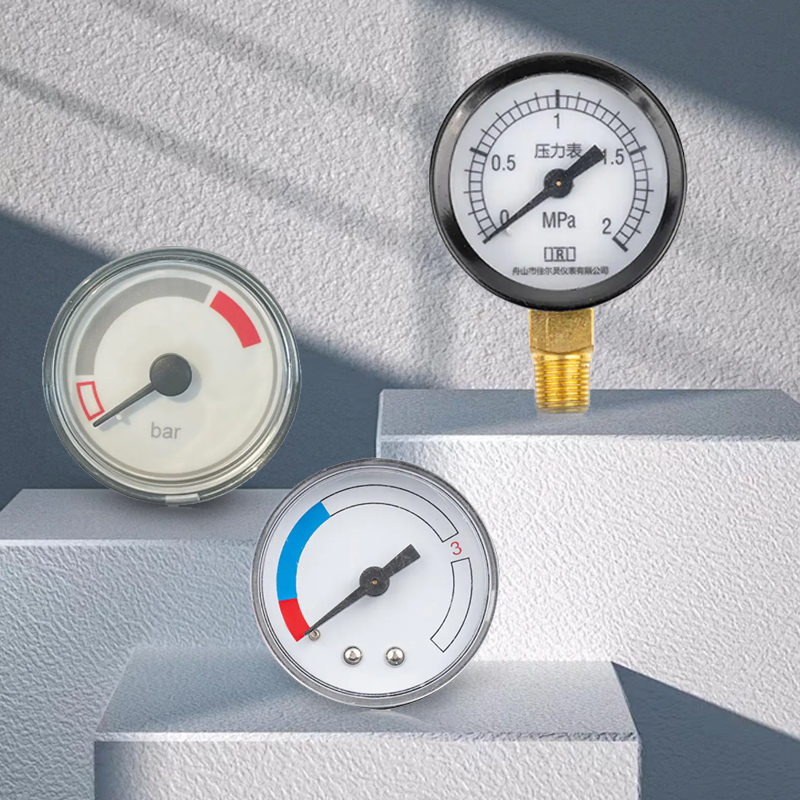 Custom General Pressure Gauge Pressure Gauge Suppliers, ManufacturersZhoushan Jiaerling Meter Co., Ltd. is China General Pressure Gauge Pressure Gauge Manufacturers and OEM/ODM Suppliers, supply Custom Pres...View Product →
Finally, keep in mind the difference between static and dynamic pressure. A gauge on a closed line reads static pressure, which is what codes and manufacturers reference. Opening a faucet or bleeding an air line lowers the reading because the system is no longer at rest. When temperature and vibration could distort the result, it pays to understand how working environments affect pressure gauge accuracy before selecting an instrument.
Correcting an abnormal reading starts with identifying which direction the pressure sits in and what the system normally needs.
| Situation | Common causes | First step |
|---|---|---|
| Low home water pressure (below 40 PSI) | Leaks, partially closed valve, clogged sediment filter | Confirm the main shutoff valve is fully open and inspect for leaks; if nothing appears, retest with a gauge |
| High home water pressure (above 80 PSI) | Failing pressure regulator, municipal supply changes | Install or replace a pressure-reducing valve |
| Low tire pressure (below specification) | Slow leak, temperature drop, puncture | Inflate to the door-jamb value and recheck within a week |
| High tire pressure (above specification) | Over-inflation, hot tires | Release air until the cold reading matches the specification |
| Well pump short-cycling | Wrong pressure switch setting, failed tank bladder | Verify the tank pre-charge; call a well technician for electrical adjustments |
| Pool filter pressure 8–10 PSI above baseline | Dirty filter, clogged skimmer basket | Backwash or clean the cartridge |
Call a licensed professional when the work involves the electrical side of a well pump, underground supply lines, or any modification to an industrial pressure system. Routine checks follow a simple cadence: home water pressure once a year, tire pressure once a month, and industrial systems according to the plant's preventive maintenance schedule. When you are troubleshooting a pump or valve issue, the guidance on using pressure gauges to troubleshoot pumps and valves shows how to interpret readings across different components.
Selecting a pressure gauge comes down to three decisions: range, material, and case construction.
Range: choose a full scale about 1.5 to 2 times your normal working pressure, and ensure the normal reading falls between 25 and 75 percent of the scale. That keeps the reading in the most accurate zone and protects the gauge from pressure spikes.
Material: consider what the gauge will contact. Clean water and air work fine with standard brass or steel wetted parts. Corrosive chemicals, slurries, or fluids that crystallize call for a diaphragm-sealed gauge, which isolates the sensing element while still providing a reliable reading. High-vibration machinery such as compressors and pumps benefits from an oil-filled, shock-resistant gauge.
Environment: humidity, temperature extremes, and washdown conditions affect the housing, lens, and connection fitting. If you are outfitting a plant line, industrial pressure gauge options for pneumatic systems provide a practical starting point for comparing ranges, cases, and connection sizes. For batch purchases or OEM projects, sending your working pressure and media details directly to the manufacturer is the fastest way to confirm the correct specification.
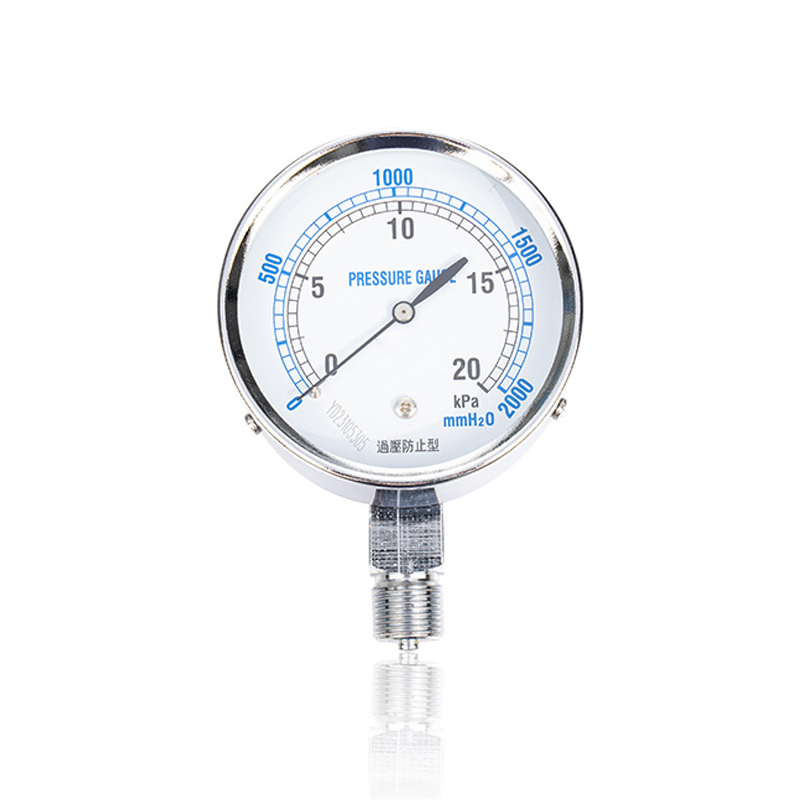 Custom Industrial Production Pressure Gauge Suppliers, ManufacturersZhoushan Jiaerling Meter Co., Ltd. is China Industrial Production Pressure Gauge Manufacturers and OEM/ODM Suppliers, supply Custom Pres...View Product →
So what is a normal PSI range? The precise answer is that it depends on what you are measuring. A home water line at 40 to 60 PSI is ideal, a tire at 35 PSI is healthy, and an industrial air system at 100 PSI is routine. What never changes is the logic: know the recommended range for your system, measure it with a gauge that fits the application, and correct the reading when it drifts outside the band. Keep this guide as a quick reference, and when you need a gauge for the job, the product categories on this site show what is available for every major application.

+86-15105800222
+86-15105800333


Shuangtang Industrial Zone,Liuheng Town , Putuo District, Zhoushan City,Zhejiang Province,China
We will reply to you within 12 hours after receiving the inquiry on working days. Or, give us a call.
The information provided on this website is intended for use only in countries and jurisdictions outside of the People's Republic of China.
Copyright © Zhoushan Jiaerling Meter Co., Ltd. All Rights Reserved.
 Wholesale Pressure Gauge Factory
