 English
 中文简体
中文简体


Call us
+86-15105800222
+86-15105800333


A pressure gauge is not a decoration on a pipe. It is the fastest way to answer three questions: is the system safe, is it working, and where is the problem? You will find pressure gauges anywhere a gas or liquid is contained, pumped, compressed, heated, cooled, filtered, or delivered: on a water line, a refrigerant circuit, an oxygen regulator, a hydraulic press, a boiler, a fuel system, a medical suction unit, and even a dive tank. The exact location changes, but the job stays the same: turn invisible pressure into a number that a person can act on.
This guide answers the question from a practical, application-first point of view. It covers where pressure gauges are used, which gauge type fits each place, what specifications matter, and what buyers and maintenance teams should check before installing one.
Use a pressure gauge wherever pressure must be monitored, controlled, verified, or documented. That includes pump discharge lines, filter inlet and outlet points, compressed air systems, refrigerant circuits, steam headers, medical gas lines, hydraulic power units, fuel systems, water purifiers, boilers, tire service stations, and laboratory benches. If a process has a pressure limit, a pressure drop, or a pressure target, a gauge belongs nearby.
Pump discharge, filter differential, reverse osmosis feed, well water, irrigation, and chemical dosing lines. The gauge confirms flow resistance, pump health, and whether a filter is clogging.
Suction and discharge pressure, refrigerant charging, chiller loops, air handlers, and duct static pressure. Technicians use gauges to diagnose capacity loss, leaks, and compressor stress.
Oxygen regulators, medical air, vacuum suction, blood pressure cuffs, anesthesia machines, dialysis equipment, and clean gas benches. Accuracy and cleanliness matter more than rugged appearance.
Wellheads, separators, pipelines, reactors, compressors, and storage tanks. Gauges must resist corrosion, vibration, high pressure, and sometimes explosive atmospheres.
Engine oil pressure, fuel pressure, hydraulic steering, transmission lines, tire inflation, and dive tanks. Space is tight, vibration is constant, and readings must be quick.
Compressed air, hydraulic presses, vacuum clamping, welding gas, CNC coolant, injection molding, and packaging lines. A gauge often becomes the first warning before downtime.
Steam headers, feedwater lines, condensate return, heat exchangers, solar thermal loops, and waste heat recovery. High temperature protection is a design requirement, not an option.
Filtration, carbonation, pasteurization, CIP circuits, steam, and compressed air. Hygienic connections and cleanable wetted materials reduce contamination risk.
The list is broad because pressure itself is broad. A gauge can be a two-inch utility dial on a home water filter, or a six-inch stainless steel instrument on a chemical reactor. The application decides the body material, internal mechanism, accuracy class, connection size, and safety features.
Water systems are one of the easiest places to justify a pressure gauge because pressure tells you what the water is doing without opening the line. On a pump discharge, the gauge shows whether the pump is producing its expected head. On a filter, the difference between inlet and outlet pressure shows loading. On a reverse osmosis skid, feed pressure and concentrate pressure help operators protect membranes from fouling or excessive stress.
For dirty water, high-viscosity media, or lines that may clog, a diaphragm seal keeps the measuring element away from the process fluid. That single choice often decides whether the gauge lasts months or years.
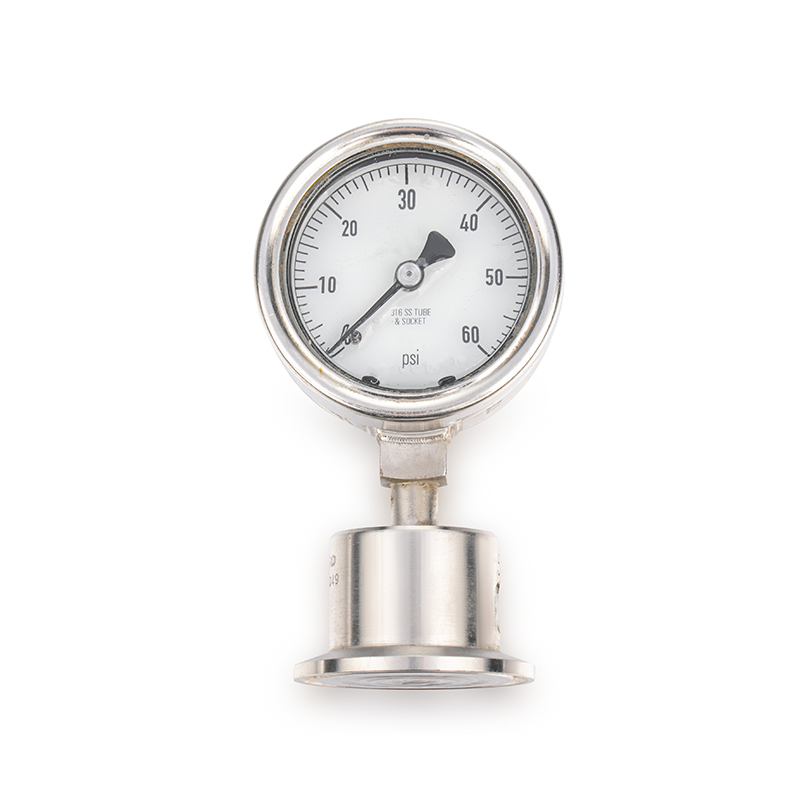 Water Treatment Pressure Gauge with Diaphragm Seal ManufacturersDiaphragm-Seal Pressure GaugeView Product →
HVAC and refrigeration work depends on pressure relationships. A technician cannot judge refrigerant charge, compressor performance, or expansion valve operation by sight alone. The gauge set converts temperature and pressure into a diagnostic story: low suction pressure may point to a restriction or undercharge, while high discharge pressure may point to poor condenser airflow or non-condensable gas.
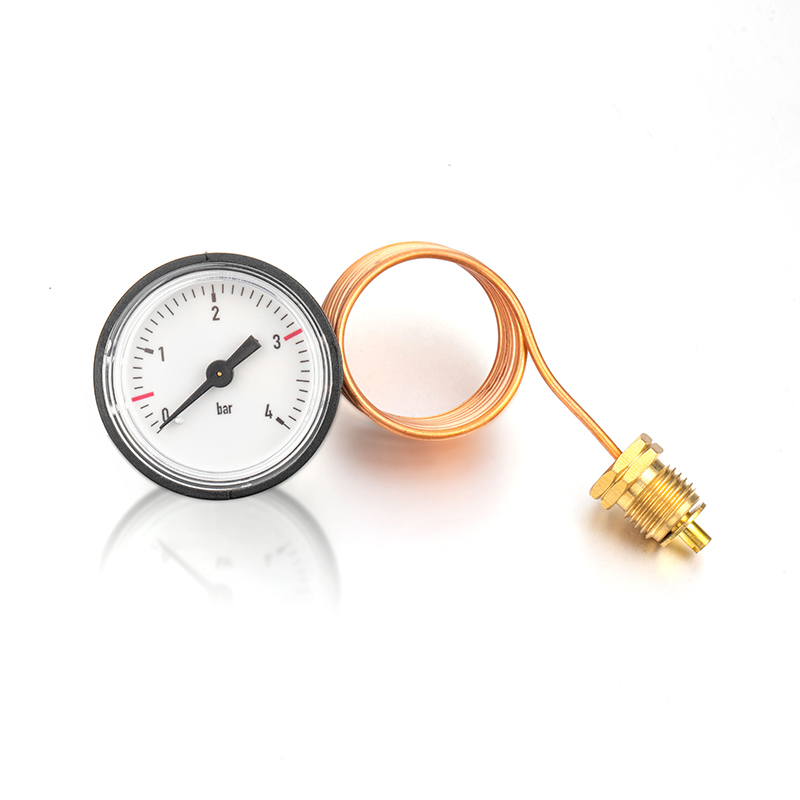
A pressure gauge with a refrigerant temperature scale helps a technician compare saturation temperature with actual line temperature. That comparison supports superheat and subcooling calculations without carrying a separate chart. For field service, a capillary gauge or remote reading capillary manometer can place the dial where it is easy to read while the sensing point stays at the line.
Specification notes for HVAC gauges include refrigerant compatibility, burst pressure, dial size, and whether the gauge will be permanently installed or used as a service tool. Permanent panel gauges should be selected for the expected pressure range and ambient temperature. Service gauges should be rugged, readable in low light, and protected against accidental drops.
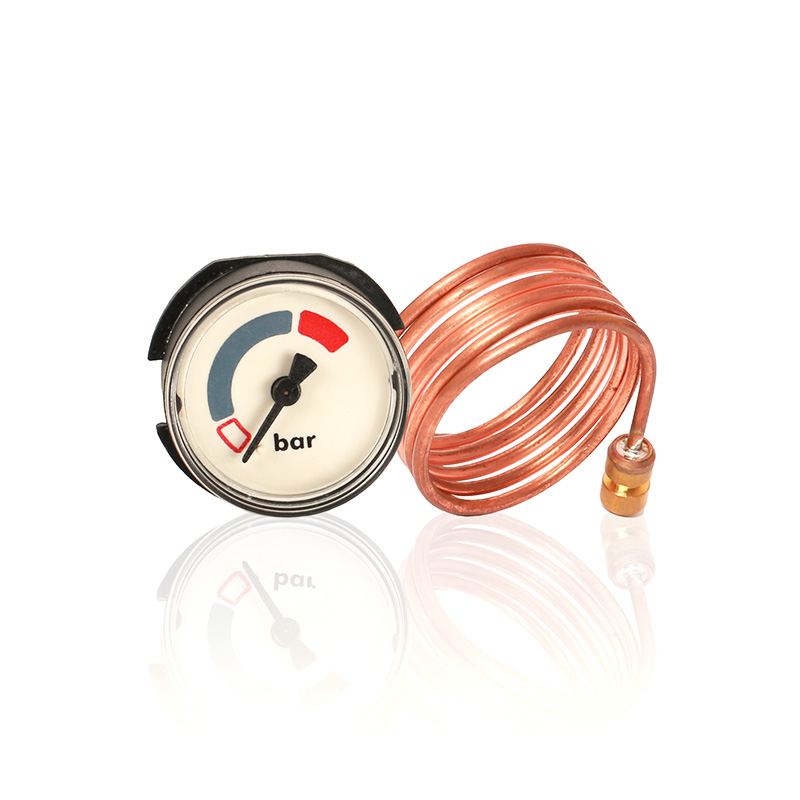 HVAC Capillary Pressure Gauge ManufacturersHVAC capillary pressure gauges transmit pressure signals to remote locations through a thin capillary tube, which can be used in scenarios where installation space is ...View Product →
Medical and laboratory pressure gauges have a different priority: the reading must be trustworthy, repeatable, and safe for the patient or sample. A gauge on an oxygen regulator, for example, is not just a convenience. It helps confirm that the delivery pressure matches the therapy requirement and that the regulator is not creeping or leaking. A blood pressure gauge must maintain calibration because a small error can change a clinical decision.
Medical gauges often require accuracy classes tighter than general industrial utility gauges. The dial should be easy to clean, and the window material should tolerate repeated disinfection. For oxygen service, materials must be compatible with oxidizers and free from oils or contaminants that could create a fire hazard. Calibration records matter because medical equipment is regularly audited and maintained.
For oxygen regulators and similar equipment, a dedicated medical equipment oxygen pressure gauge is selected for compatibility, accuracy, and clean construction rather than for general industrial use.
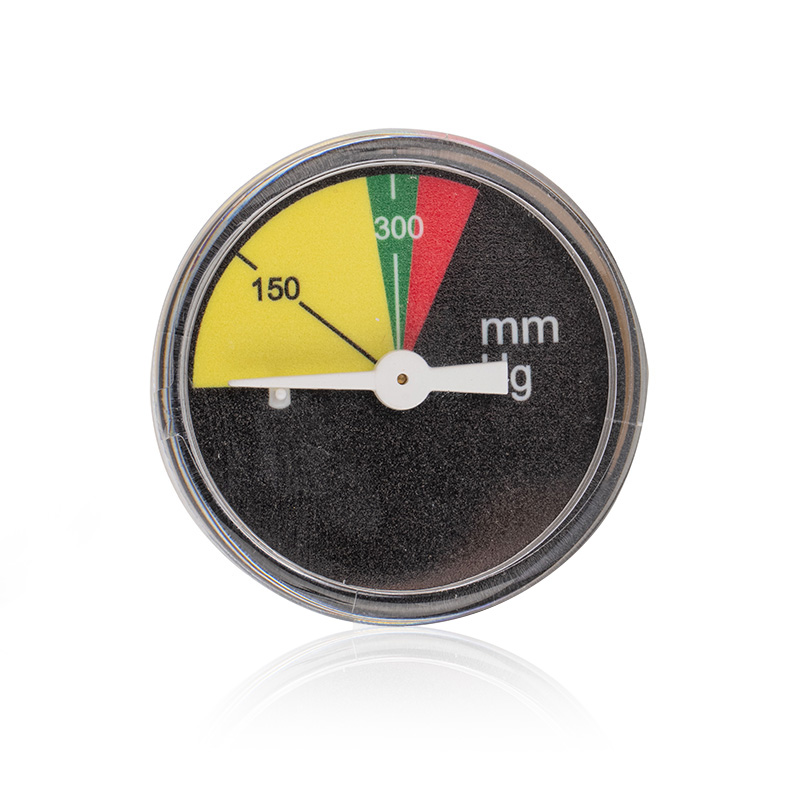 Medical Sphygmomanometer Gauge ManufacturersThe core performance of medical sphygmomanometer gauges is their high-precision measurement capabilities. These devices are usually strictly calibrated to provide accu...View Product →
Oil, gas, and petrochemical plants use pressure gauges at almost every stage of the process. Pressure confirms flow, detects blockages, protects rotating equipment, and supports emergency response. The environment is often the real challenge: corrosive gases, high temperatures, vibration, pulsation, and classified areas all influence gauge selection.
A petrochemical gauge may look similar to a general gauge from the outside, but the wetted material, seal, fill fluid, and certification can be very different. Replacing it with a utility gauge usually leads to early failure and unreliable readings.
Vehicles and vessels create pressure everywhere: fuel, oil, coolant, hydraulic fluid, air conditioning, tires, and diving cylinders. These environments add motion, temperature swings, salt, dirt, and limited access. A gauge must be readable at a glance and survive conditions that would destroy a laboratory instrument.
Tire pressure is the most familiar example for many people. A pencil gauge, dial gauge, or digital gauge reads the same physical quantity, but their tolerances and durability differ. A workshop dial gauge with a flexible hose is easier to use on dual wheels, while a compact digital gauge gives a fast number for a daily check. For engine and hydraulic systems, the gauge is often permanently mounted so the operator can see a drop before damage occurs.
Marine buyers usually pay attention to corrosion protection, case sealing, and resistance to salt spray. Automotive buyers focus on vibration resistance, temperature range, and whether the gauge can tolerate oil, fuel, or refrigerant contact without leaking or fogging.
In a factory, pressure gauges support uptime. Compressed air is one of the largest energy costs in many plants, and leaks or pressure drops can quietly waste money. Hydraulic systems use pressure to clamp, lift, press, and move. Vacuum systems use negative pressure to hold parts, fill containers, or remove fumes. Each system needs a gauge at a location where an operator or maintenance technician can interpret the reading quickly.
A gauge on a compressed air header can reveal a pressure drop that no single machine alarm reports. A gauge upstream and downstream of a filter shows when the element needs changing. A gauge on a hydraulic power unit can show whether a relief valve is bypassing or a cylinder is leaking internally.
For general pneumatic and manufacturing use, a 2-inch or 2.5-inch gauge with a 1/4 inch connection is often sufficient. For pulsating pumps or high-cycle hydraulic systems, a liquid-filled gauge or a pressure snubber is a better long-term choice.
Steam and hot water systems are pressure and temperature systems at the same time. A boiler gauge shows whether the burner is maintaining the setpoint, while a steam header gauge shows whether distribution pressure is stable. In energy plants, pressure readings also support efficiency calculations and safety interlocks.
High-temperature steam requires more than a standard gauge. A siphon or pigtail creates a water seal that protects the Bourdon tube from live steam. A capillary or remote reading arrangement can move the dial away from a hot surface. The gauge should also be selected for the correct pressure range and temperature rating, because a gauge that is accurate at room temperature may drift or fail when exposed to continuous heat.
Operators should be able to see the gauge from the normal walking path. Mounting height, dial size, and lighting are not cosmetic details. If the reading is hard to see, it will not be checked often enough to prevent a problem.
Food and beverage production uses pressure gauges for filtration, carbonation, pasteurization, cleaning-in-place, and utilities. The main difference from general industrial service is cleanability and material compatibility. A gauge on a product contact line must not create crevices, harbor bacteria, or react with cleaning chemicals.
For product contact, a diaphragm seal with a hygienic connection is often used. The seal transfers pressure to a fill fluid and then to the gauge, keeping the instrument isolated from the product. Stainless steel wetted parts, smooth surfaces, and appropriate sealing materials reduce cleaning risk. In utility areas where contact is not possible, a standard stainless steel gauge may be acceptable, but it should still tolerate washdown and humidity.
The best way to choose a gauge is to describe the location before looking at a catalog. Answer these questions: What is the media? What is the normal pressure? What is the maximum pressure? What is the temperature? Is there vibration or pulsation? Is the area corrosive or classified? How accurate must the reading be? A short list of answers usually narrows the selection very quickly. For a deeper process, see this guide on how to choose and use a pressure gauge for accurate readings.
| Application | Common gauge type | Critical specifications | Why it matters |
|---|---|---|---|
| Water pump discharge | Stainless steel or liquid-filled utility gauge | Range 1.5 to 2 times working pressure; 1.6 percent or better; NPT or G connection | Water hammer and vibration can damage an unprotected movement. |
| HVAC refrigerant service | Manifold, capillary, or pressure-temperature gauge | Refrigerant scale, burst pressure, durable case, hose or capillary option | Technicians need fast superheat and subcooling diagnostics. |
| Medical oxygen | Medical oxygen regulator gauge | Clean construction, stable accuracy, oxygen-compatible materials | Contamination and drift can affect patient safety. |
| Petrochemical process | All stainless steel, diaphragm sealed, or explosion-proof gauge | Wetted material, fill fluid, temperature rating, area certification | Corrosion and classified areas demand more than a general gauge. |
| Steam boiler | Bourdon tube gauge with siphon | High-temperature protection, 1.0 or 1.6 accuracy, solid front case | Live steam can destroy a gauge without a condensate seal. |
| Tire service | Pencil, dial, or digital tire gauge | 0 to 60 psi or 0 to 100 psi, plus or minus 1 to 2 psi, durable chuck | Small errors change tire wear, fuel use, and safety. |
| Compressed air header | General utility or differential gauge | 0 to 200 psi common, 1.6 percent, protected from pulsation | Pressure drop reveals leaks, filter loading, or undersized piping. |
| Food and beverage product line | Sanitary diaphragm seal gauge | 316L stainless steel, hygienic connection, cleanable surface | The instrument must not create a contamination risk. |
Select a range that places normal operation in the middle third of the dial. If the normal pressure is 60 psi, a 0 to 100 psi gauge gives better resolution than a 0 to 600 psi gauge. Accuracy classes such as 1.0, 1.6, and 2.5 percent of full scale are common. The smaller the number, the tighter the accuracy. For safety, the gauge should also have a burst pressure well above the maximum possible system pressure.
Brass is economical for clean water and air. Stainless steel suits corrosive media, outdoor use, and many process lines. Diaphragm seals protect the gauge from viscous, dirty, crystallizing, or highly corrosive fluids. Seal material matters too: nitrile, Viton, PTFE, and EPDM behave differently with oils, acids, steam, and solvents.
Outdoor installations need UV-resistant cases and moisture protection. Vibration calls for liquid filling or remote mounting. High temperature calls for siphons or capillaries. Explosive atmospheres may require flameproof or intrinsically safe instruments. For operators, a solid front case with a blow-out back is a common safety feature on high-pressure service.
Bottom connection, back connection, panel mount, and surface mount are the usual choices. A back-connection gauge fits a panel or a compact manifold. A bottom-connection gauge fits a pipe tee or a bracket. Thread type must match the port: NPT, G, BSP, or metric. Adapters can work, but every extra fitting adds a potential leak path.
Different mechanisms solve different problems. A Bourdon tube is the workhorse for moderate and high pressure. A diaphragm gauge handles low pressure, viscous media, and corrosive fluids when paired with a seal. A capsule gauge is useful for very low pressure and gas analysis. Differential gauges compare two pressures and reveal filter loading or flow imbalance. Digital gauges add resolution, peak hold, and data logging, while mechanical gauges remain preferred where power is unavailable or where a simple pointer is easier to trust.
| Type | How it works | Best-fit locations | Watch-outs |
|---|---|---|---|
| Bourdon tube | A curved tube straightens under pressure and moves a pointer. | Water, air, steam, oil, hydraulic, and general industrial lines. | Needs protection from vibration, pulsation, and high temperature. |
| Diaphragm gauge | A flexible diaphragm deflects under pressure. | Corrosive, viscous, slurry, and low-pressure process lines. | Seal and fill fluid must match the media and temperature. |
| Capsule gauge | Two thin diaphragms form a capsule that expands with pressure. | Very low pressure, gas burners, clean rooms, and draft measurement. | Not suitable for high pressure or heavy pulsation. |
| Differential gauge | Measures the difference between two pressure ports. | Filter monitoring, duct static, clean room pressure, and flow loops. | Ports must be connected correctly or the reading will mislead. |
| Liquid-filled gauge | Case fluid dampens pointer movement. | Pumps, compressors, mobile equipment, and vibrating machinery. | Fill fluid may not suit oxygen, food contact, or extreme temperatures. |
| Digital gauge | A sensor converts pressure to an electronic display. | Testing, calibration, HVAC service, and data recording. | Requires power, batteries, and protection from moisture or impact. |
| Absolute gauge | Reads pressure relative to a vacuum reference. | Vacuum processes, laboratories, and altitude-related testing. | Higher cost and different reference than gauge pressure. |
| Manometer | Uses a liquid column to indicate pressure difference. | Low differential pressure, training, and simple field checks. | Fragile, orientation-sensitive, and not for high pressure. |
A gauge that is installed correctly will last longer and read more consistently. Most failures are not caused by the gauge alone. They come from water hammer, overpressure, vibration, temperature, contamination, or a blocked impulse line. A few simple practices prevent most of these problems.
| Service | Typical interval | What to check |
|---|---|---|
| General utility air or water | 12 to 24 months | Zero, pointer movement, case damage, leakage. |
| HVAC and refrigeration service | 6 to 12 months for critical tools | Accuracy at common refrigerant pressures, hose seals, zero. |
| Medical gas and blood pressure | 6 to 12 months or per facility policy | Accuracy, cleaning condition, regulator creep, documentation. |
| Boiler and steam | 6 to 12 months | Siphon condition, high-temperature damage, safety markings. |
| Petrochemical and process | 3 to 12 months depending on risk | Diaphragm seal, fill fluid, corrosion, certification, leakage. |
| Food and clean utilities | 6 to 12 months or per hygiene plan | Cleanability, seal integrity, material condition, calibration. |
Most pressure gauge problems begin before the gauge is installed. A purchase based only on thread size and dial diameter often misses the conditions that determine service life. These are the mistakes that appear again and again in maintenance logs.
A useful procurement habit is to write a one-line service description for every gauge: media, normal pressure, maximum pressure, temperature, connection, environment, and accuracy. That single line prevents most returns and field failures.
Common home locations include water purifier inlet and outlet, booster pumps, irrigation systems, swimming pool filters, boiler or water heater loops, compressed air tools, bicycle or car tires, and propane or gas regulators. In each case, the gauge confirms that pressure is within the expected range.
They are used on pumps, compressors, filters, reactors, heat exchangers, boilers, steam headers, hydraulic power units, vacuum systems, refrigerant circuits, medical gas lines, food processing skids, and wastewater treatment equipment. Any process that depends on pressure control is likely to have at least one gauge.
The Bourdon tube gauge is the most common for general industrial pressure measurement. It is simple, mechanical, and available in many ranges, dial sizes, and materials. Diaphragm gauges are common where corrosion, viscosity, or low pressure requires a different sensing element.
Sometimes, but not always. The pressure range and connection may match, yet the wetted materials and seals may not. Water service may accept brass, while ammonia, oxygen, acids, or refrigerants may require specific materials and cleaning. Always check media compatibility before using one gauge across different lines.
Replace a gauge when it fails calibration, shows a bent pointer, leaks, fogs internally, or cannot return to zero. In clean utility service, that may be every three to five years. In corrosive, vibrating, or pulsating service, replacement may be needed much sooner. Maintenance records are more useful than a fixed calendar.
Choose a range where normal operating pressure falls near the middle of the dial. A common rule is 1.5 to 2 times the normal working pressure. If the maximum pressure can spike, make sure the gauge burst pressure and overpressure rating are suitable.
Liquid filling dampens the pointer and internal movement when vibration or pulsation is present. It improves readability and reduces wear on pumps, compressors, mobile equipment, and hydraulic systems. It is not automatically right for oxygen, food contact, or very high temperature.
Digital gauges offer higher resolution, peak hold, and data logging, which helps testing and troubleshooting. Mechanical gauges need no power and are often easier to read at a distance. Many facilities use both: mechanical gauges for permanent panels, digital gauges for service and calibration checks.
A pressure gauge displays a reading locally. A pressure transducer converts pressure into an electrical signal for a controller, data logger, or building management system. A transducer is used when pressure must be transmitted, recorded, or used in automatic control.
Differential pressure gauges are used across filters, strainers, heat exchangers, clean rooms, duct systems, and flow elements. They show the pressure difference between two points, which is often more useful than a single pressure reading because it reveals restriction, loading, or imbalance.
If you are matching a gauge to a specific line, start with the process conditions rather than the product photo. Write down the media, normal pressure, maximum pressure, temperature, connection, mounting position, and environment. That information will point to the right mechanism, range, material, and protection level.
For a pump room, a filter skid, an HVAC panel, a medical gas outlet, or a production line, the gauge should be treated as part of the system rather than an accessory. A correctly chosen gauge gives maintenance teams a clear signal, reduces guesswork, and helps protect people, equipment, and product quality.

+86-15105800222
+86-15105800333


Shuangtang Industrial Zone,Liuheng Town , Putuo District, Zhoushan City,Zhejiang Province,China
We will reply to you within 12 hours after receiving the inquiry on working days. Or, give us a call.
The information provided on this website is intended for use only in countries and jurisdictions outside of the People's Republic of China.
Copyright © Zhoushan Jiaerling Meter Co., Ltd. All Rights Reserved.
 Wholesale Pressure Gauge Factory
